kidattypewriter

Monday, January 27, 2014

An opinion column about the weather

I have just written an opinion column about the weather. Here it is.

An opinion column about the weather


The weather. Everyone talks about it, but it’s time we actually did something about it. By taking hard action and firm decisions on the weather now, our government will win worldwide acclaim and set the planet on path for a better future. Or will it? To find out, I asked Professor of Climactic Meteorology, Mr Tim Tims, if it was time we did something about the weather.

“Yes”, he said.

So that’s that. And yet despite this clear consensus of scientific opinion, there remain a hard core of sceptical deniers cynically nay-saying every call for action in a negative fashion.

Looking for answers, I went to Professor Smith Smith, CBA, HONS, PHD, FGHIJKLMTOZ of Alphabet University.

“The rain’s a bit wet lately” I said. “Surely it’s time for legal recognition of this difficult problem?”

“Well, no” he said.

And so the sad cycle of denialism continues.

Nevertheless, it is becoming overwhelmingly clear to the vast majority of the enlightened community that we need to take action now. I suggest we start with clouds. It’s high time we entrusted this vital public service to a reputable government agency and left all these tired old public/private debates behind. It’s that sort of wasteful situation that has led us to where we are today, wherever that is.

And then there’s wind. The situation here is certainly becoming urgent. Sure, we’ve all enjoyed the sensation of a cool breeze in our hair during a long hot day at the beach, but isn’t it time we all acted sensibly and restricted the distribution of wind to those who most need it, in order to keep this vital national resource for future generations of Australians?

And what about the sun? On the one hand, thousands of people all over the world have enjoyed its benefits from time immemorial, but isn’t it time we got rid of this outdated technology and replaced it with a truly modern public transport system? This proposal has its critics, but when I conducted a reader survey in the following paragraph, the results from readers were outstandingly positive.

SHOULD WE REPLACE THE SUN?

1. Yes  ________________________.

(Please tick relevant box).

There are many many more examples that I could go through, but when we get on top of things, the bottom line is this: isn’t it time we replaced the environment with something more cost-effective and health-wise to prevent the rise of childhood obesity and preventable workplace fatalities? Isn’t it time that we, at the very least, included a health warning to ensure that we look after all Australians, instead of perpetuating the old colonialist system of racial discrimination? I think we both know the answer to that question. Or do we? Yes.

FIG 1: Clouds.Yet another example of how desperate the situation has become.

Friday, January 24, 2014

Proposed new character for Sesame Street

Previously, beloved children's educational program Sesame Street has introduced such characters as Alex, whose muppet father is in prison, and has taught Cookie Monster that "cookie is a sometimes food".

I would like to propose a new character for the program, loosely based on the already existing character, The Count.  This new character would help to introduce children to the magic of swearing, and he would be called - The Cunt.

As I see it, his main function in the program would be to laugh manically while reeling off lists of naughty words, culminating in a final, apocalyptic shout of "Cunt", with theatrical organ music, thunder cracks and lightning flashes, bats, etc.

Sample scene:

(THE CUNT enters his castle and finds BIG BIRD and SNUFFLEUPAGUS waiting for him.)

THE CUNT: Bollocks! I vastn't expecting to see you!

BIG BIRD and SNUFFY block up their ears as best they can, shocked at THE CUNT's profanity. 

THE CUNT: Eh? Vats zat? Bollocks, doodle! BWAHAHAHAHAHAHA! Bollocks, doodle, fanny, arsche, titz! BWHAHAHAHAHAHA! BWAHAHAHAHAHAHAHAHAHAHA! Bollocks, doodle, fanny, arsche, titz, pussy, cock! BWAHAHAHAHAHA! BWAHAHAHAHAHAHAHA! BWAHAHAHAHAHAHAHAHAHAHAHAHAHAHAHAHAHAHA! Bollocks, doodle, fanny, arsche, titz, pussy, cock, nipple, ving-vang - (pause for dramatic effect) - CUUUUUUUUUUUUUUUNT!  BWAHAHAHAHAHA! BWAHAHAHAHAHAHAHA! BWAHAHAHAHAHAHAHAHAHAHAHAHAHAHAHAHAHAHA! BWAHAHAHAHAHA! BWAHAHAHAHAHAHAHA! BWAHAHAHAHAHAHAHAHAHAHAHAHAHAHAHAHAHAHA! BWAHAHAHAHAHA! BWAHAHAHAHAHAHAHA! BWAHAHAHAHAHAHAHAHAHAHAHAHAHAHAHAHAHAHA! (Cue usual thunder, lightning, organ music, flying penises and vaginas, etc).

(In his excitement, THE CUNT stubs his toe on a stair)


THE CUNT: Ach! Oopschie-doopschie!

FIN

(Possibly some might prefer him to titter manically rather than laugh manically. I'm open to suggestions on that point.)

Friday, January 17, 2014

The dangers of excessive thinking

If, like me, you find that the drinking of beer at some point leads to the brewing of beer, which leads to talking about beer and thinking about beer excessively - a sad decline I could have avoided if I'd only stuck with the drinking - at some point, you'll start talking about the beginning of beer. People have talked about the beginning of beer since, well, the beginning of beer, so there's a lot of stories about, although oddly we don't know which story is the right one. Perhaps if we hadn't been telling so many stories and paying attention we would know exactly how it happened.

With the coming of this advanced age of scientific achievement and technical rigour and shiny machines that go ping and stuff, you'd think we'd have worked it all out and really know how beer began. But no, we're still telling stories, more stories, often just as unconvincing and disreputable as the stories told by earlier, more drunk people, but far less entertaining.

I recall watching part of a documentary about beer creating civilisation where one scientist claimed that beer originated by early humans putting beer 'in a collection vessel'. A 'collection vessel'. Right. Couldn't he have just said 'a pot?' The early humans then went off and did early human things while somehow the barley got wet, then sprouted, and then leached out sugar into the water, and then began to ferment.

A recent theory about the origin of mead that I read contained some similar rather silly speculation: the earliest mead maker was mixing honey with water to make it flow better, and gathering it in an animal skin bag, 'perhaps' speculated the writer, to take back the honey to the 'alpha' human. Who knows just why he wanted to drag in this piece of half-arsed sociology and anthropology into his speculating about the origins of mead, but at any rate, the theory itself is as simple as some folks put water and honey in a bag and then some yeast came along. Which could just as well be how it happened, but on the other hand, if we really want a farfetched origin story, why don't we turn to the drunk, dangerous, and much more entertaining ancient Scandinavians:


The gods had a dispute with the folk which are called Vanir, and they appointed a peace-meeting between them and established peace in this way: they each went to a vat and spat their spittle therein. Then at parting the gods took that peace-token and would not let it perish, but shaped thereof a man. This man is called Kvasir, and he was so wise that none could question him concerning anything but that he knew the solution... when he came upon invitation to the abode of certain dwarves, Fjalar and Galarr, they called him into privy converse with them, and killed him, letting his blood run into two vats and a kettle. The kettle is named Ódrerir, and the vats Són and Bodn; they blended honey with the blood, and the outcome was that mead by the virtue of which he who drinks becomes a skald or scholar.

So: the Gods make a man out of spit, and then the blood of this man of spit is mixed with honey to become mead. Got that? Spit appears again when we read the following from The Kalevala:

'Thou, my golden-breasted marten,
Thou my son of golden color,
Haste thou whither I may send thee,
To the bear-dens of the mountain,
To the grottoes of the growler,
Gather yeast upon thy fingers,
Gather foam from lips of anger,
From the lips of bears in battle,
Bring it to the hands of Kapo,
To the hands of Osmo's daughter.'


"Then the marten golden-breasted,
Full consenting, hastened onward,
Quickly bounding on his journey,
Lightly leaping through the distance
Leaping o'er the widest rivers,
Leaping over rocky fissures,
To the bear-dens of the mountain,
To the grottoes of the growler,
Where the wild-bears fight each other,
Where they pass a dread existence,
Iron rocks, their softest pillows,
In the fastnesses of mountains;
From their lips the foam was dripping,
From their tongues the froth of anger;
This the marten deftly gathered,
Brought it to the maiden, Kapo,
Laid it in her dainty fingers.

"Osmotar, the beer-preparer,
Brewer of the beer of barley,
Used the beer-foam as a ferment;
But it brought no effervescence,
Did not make the liquor sparkle.

For those who didn't bother reading that to the end, it basically says that in order to get the first beer ready, "Osmotar, the beer-preparer" orders for some wild-bear spit. There's also an oak chip and cones from the fir tree and a magic squirrel and bee involved in there somewhere, to be honest I can't remember it all in detail. Still, you're not going to get that from a chap who habitually talks about 'collection vessels' and honey being collected for 'alpha humans', are you?

I don't really have any other examples and it's too hot to think of a proper way of rounding this post off, so instead I'll just

UPDATE! - By the way. Beer poetry here!

Tuesday, January 14, 2014

Theology corner!

Now Er, Judah's firstborn, was wicked in the sight of the LORD, and he put him to death. - 1 Chronicles 2: 3
Er, just how did Er err? Was Er who erred from Ur? Did Er err in Ur?

Heyza, groovtacular heptasms!

I wrote this on the weekend. I still have no idea what it means.

Heyza, groovtacular heptasms! Want a coolio dealio to zwing-zwang your razzamattazz? To zip-zooptacular up your supercallafragilisticexpialadocious dongle so it's in tip-top-tip-top-tip-topper form? Calltextmailbuzzzapdinglezankfaxvote 131 at 131 at abcdefg dot dash dot dash dot dot dot dash dash dash dot com NOW!

Following that, I wrote this:

Actually certainly definitely really real people! Suffering an existential crisis? LOGISTIC SOLUTION ANSWER PROBLEMATIC TECHNO-SOLUTION LOGISTICS could potentially possibly hypothetically maybe just maybe help you! Call 1300 1300 1300.

Short and to the lack of point. Then I concluded with this:

Fun fun fun in a gloriously funky funnulacious ball of amazulament to the power of a fazillion burning suns fun! It isn't fun-ish! It's definitely not -ish! No ish-ishm-iffy-um-izzy-and/or-backslash-hyphen-ish at all! No! It's fun-tacular-acious-est-est-est-isular-itely-ently-intly-full-stop-exclamation-mark-aciousness to the power of wow! What were we talking about again? I forget. Oh yeah! Fun! Hyperglycaemictasms of fun! We're coughing up great gobularverbosities of fun! Where? I wish I knew! Call me to let me know! I don't have my phone number either so call me to let me know that too! FUN!

Thank you for your time.

Degrees of dissatisfaction

It's going to be 43 degrees today. I could have gone through all my life without knowing that it was going to be 43 degrees celsius on the 14 of January 2014 quite happily, but strangely everyone seems to keep announcing this. "It's going to be 43 degrees tomorrow" announced the Baron yesterday, meaning that by the time the tomorrow that she was talking about had rolled around, it was today. Meanwhile, everyone on facebook apparently felt some curious mass urging to announce that it is going to be 43 degrees today, because it is of course absolutely necessary to know with all the exactitude of modern measurement precisely what degree it is going to be on any one particular day. Just to round things off, I logged on to the Bureau of Meteorology which informed me chirpily of the forecast, which was that it was going to be 43 degrees today. Just why, exactly, they wish to inform me in such detail about this particularity, I do not know, as they are comparatively cavalier and creative in their approach to talking about the rain: "some rain", "mostly dry", "shower or two", "few showers", "scattered showers", "possible shower". There is a lovely ambiguity in all of these statements: it leaves open the possibility that there could be no showers at all, and there could be a great deal of showers too. By comparison, the two little numerous "Four" and "three" when combined in the temperature reading of "Forty three degrees celsius" have a brute force; they are positively terrifying. Do I really need to know it is going to be 43 degrees? Why not just say that it's going to be BLOODY HOT.

 But it is perhaps a matter of personal taste. I am not one of those who wishes to grimly inform others just what the temperature is going to be tomorrow. Perhaps I might, quietly, log on to the Bureau of Meteorology occasionally to note the pertinent facts, shake my head sorrowfully at the way things are going to be, and then grimly endure it as much as I can.

It's another question entirely after you have been through the Bloody Hot day in question. Then I feel the particular temperature should be announced loudly and proudly to everyone and anyone in particular. "Yesterday was 43 degrees and it was BLOODY HOT"....

Wednesday, January 08, 2014

Super diet tips from Tim! SIX FOODS YOU SHOULD NEVER EAT AGAIN!

Welcome to another episode of Super diet tips from Tim entitled SIX FOODS YOU SHOULD NEVER EAT AGAIN.

Arsenic!
Cyanide!
Hemlock! (Unless you take it with a lot of sugar, and even then it's not recommended.)
Petrol! Not even in a light summery salad.
Strychnine!
Broccoli! GREAT HEAVENS, NO, NEVER EAT THE BROCCOLI! 

In conclusion, buy yourself a chocolate. It is to healthy eating what arsenic is to unhealthy eating!

UPDATE! -  Blatant indoctrination of children into the dangers of drug-taking!


Ordering beer by the yard, and other knotty questions

Chatting on Aussie Home Brewer recently about my fondness for the traditional measurements for drinks in a pub, pots and pints, I commented that 'ordering beer by the yard would seem excessive'. To which, quick as a flash, another commenter quipped: 'Tell that to Bob Hawke'.

All true. However, it occurred to me a little after that perhaps it could be time for some new measurements and descriptions in pubs. Not millilitres or litres or grams - no, I'm thinking a whole new set of words to describe the drinker's life. A few suggestions follow:

pont - a disappointing pint, a pint that is closer to a pot. A pint that didn't make it. "A dissapintment".

shanky - a shonky shandy. 

schooner-or-later - an excessively long wait at the bar. A schooner that takes a while to be drawn from the tap.

muddy - an ambiguous middy.  (Readers may ask: what is so ambiguous about a middy? Perhaps the answer lies in the question. However, I'd suggest that after a few drinks, almost anything could appear ambiguous).

spot - the remnants of a pot.

spit - a worthless remnant of a spot (above), not enough to drink.

glug - the rate at which beer is poured into the jug.

hemidemisemijohn - an extremely small demijohn.

the full John - a big demijohn. Not so demi anymore.

phony - a pretend pony. Also, a faux po.

schlong-neck - larger bottle for the, ahem, discerning man.

stubble - smaller bottle for the metrosexual man with the five o'clock shadow.

the seven o'clock swell - time in the day when posh city chaps descend on the pub.

the nine o'clock squall - time when drunk backpackers descend on posh city chaps in the pub.

the eleven o'clock dill - there's always one of them.

the barrell o'farry - NSW keg measurement.

Monday, January 06, 2014

Twongue twister

I will get my knickers in a knot, for I am a knicker knotter who knots knickers everyday. If I did not knot my knickers, they would not knot themselves. They need a knicker knotter to be knotted. So don't knock my knicker knotting, knicker knotting knockers, just knick off and get nicked. For I will get my knickers in a knot.

.... get to know one another less?

Speaking of respectable publications, let's talk about mX. Does anyone read that paper? (Probably not, as it's all about the pretty pictures and the sensational headlines, which you don't so much read as experience, in all their caps-locked glory). But when I was regularly commuting into and out of the city, I admit I did occasionally dip into their reader feedback pages - they have a regular romantic hook-up box where readers can text in to other passengers on the trains before concluding with plaintive pleas of 'Coffee?' 'Drink?'

For a while I toyed with the idea of submitting to this column with increasingly ridiculous messages directed at non-existent passengers hinting at bizarre link-ups that never happened, though of course I didn't ever follow up on it. Here, however, for your edification, I present the mX romance in all its glory....

***

Blue T-shirt. I didn't absolutely hate you when I saw you on the train yesterday arvo, and my counsellor says that's always a good sign. Meet up next court case?  

Redhead, Eltham train - here's how it works. Romance, 1 year. Lengthy affair, 2 years. Angsty break up, 1/2 year; string of emotionally unfulfilling 1-night stands, several with relatives of yours and/or mine, 1 typically involving incest embarrassingly discovered; a lengthy court battle which ends up favouring neither of us; then drug addiction of whatever is fashionable at the time. Coffee?

Groovy guy, Upfield train yesterday.  Your smile is to die for. In fact, I discovered I have terminal cancer this morning. How about it? 

Girl sitting in front of me on the Pakenham line. My relationship with alcohol is destructive and expensive. But I think we could make a fresh start! C U next train?

Girl sitting in front of me with cute hair. I think I could be the guy for you. Or girl. Hey, I'm open minded! Coffee? 

Business dude. Sorry I vomited on you. I like your shirt! Drink?

Guy in tee. Nice moustache. Meet up soon? I'm always available. Except on Tuesday. And never on Friday afternoons. Weekends possible. Mornings all out. But Sunday through Monday not doable. I *really* want to meet. 

Guy on train with camera. We've got to stop meeting like this. I'm calling the police.

Girl with large hat. You're a narcissist with extreme exhibitionist tendencies, I'm a dirty leering old man. Perfect match! Drink? 

Girl with green shirt. We've been stuck together on this crowded tram for two days. The air conditioning is gone and I'm finding it hard to breathe. But I think you're pretty! Like to go out?

iPad guy. I was the girl sending tweets on my iPhone. Let's get together and send ironically indifferent status updates to one another from opposite sides of the room! 

iPhone girl. Not sure if you mean me. Show me your selfie and I'll show you mine?

Hey, stubble, 2.30 PM Frankston train. I don't like you. Let's meet in a loud and irritating expensive cafe with loud music to get to know one another less.

J - great to catch up with you on the Epping line. Haven't really talked since You Know When when you did You Know What to You Know Who. In fact, haven't even seen you - you've missed the last two court hearings. Better not miss the next one! Love and kisses, B. 

Sunday, January 05, 2014

Terroir du Porepunkah

When we visited Bright in Easter last year we collected so many apples. Boxes and boxes of ripe apples, from burgeoning roadside trees along the way to Wandiligong, which we eventually took home, let mellow in my study for a while, and then painstakingly crushed in our blender and apple press to produce a measly eight bottles of cider. But it tastes good: the original fermented sharpness has rounded out to produce a lovely cloudy dry wine with the odour of apples dancing above the glass. "It has the terroir of Wandiligong" said the Baron when we tasted it the other day. "Yes," I replied. "If you go and lick Wandiligong, that's what it will taste like".

We went back to Wandiligong this year, and not just to lick it. We also went on walks over the Ovens River, up and down the hills, to Beechworth and Stanley and to Porepunkah, while I tromped, annoyingly, behind everyone else writing things down in my notepad about things I saw that I might be able to ferment at some point. You can ferment just about anything, of course, but sometimes you really shouldn't: a while ago Vice magazine had a documentary about Korean baby poo wine, for health, naturally (though I can't recall whether it was for the health of the person drinking or the baby). On the walk to Porepunkah, for instance, there were cicada shells, a weird beetle with green splotches on its back, a few too many cyclists barging past us, and something dead and stinking at about the halfway mark: I don't want to ferment any of those.

But we also saw

oak
wild lettuce, yes, there is such a thing and you eat its sap
pine
fir
apple
loquats
blackberries, under the bridge, on the trail, off the trail, to the left, to the right, and in all the other places - for an illegal species that shouldn't be anywhere they're certainly doing a good trick at being everywhere
fennel
bracken
spruce
grapes
apple, crab apple
plums
Queen Anne's Lace

And that's just on one of the walks that I did. I can smell that beer fermenting right now.... why not try licking the monitor to get a sense of it yourself? Savour the flavour....

Saturday, January 04, 2014

Slug pub

The beer trap, or 'slug pub', is the most traditional non-toxic way of dealing with slugs. Learn how to make your own.
Happy hour at the slug pub
Where the beer is free and fine,
Where the feng shui is to die for
And the company's divine.

We hermaphroditic molluscs
Make the very best of friends;
Join us down the garden path
At the bar just round the bend.

Happy hour at the slug pub,
With its amber nectar seas;
Put your feet up, if you have some,
And relax in dreamless ease. 


Tuesday, December 31, 2013

Setting Hollywood to rights

Wandering through the main street of Bright yesterday, I came upon a poster which made me sit up (or would have done so, if I had not already been standing up, making sitting up rather difficult). A movie poster, which informed me that Ashton Kutcher starred in JOBS, a movie of the life and times of Apple company founder Steve Jobs.

This fact, of an actor (presumably alive) playing the role of a company founder (recently dead) would not have caused me quite so much wonderment but for the fact that a whole lot of actors seem to be doing similar things lately. The lives of the famous have become so cheap that shortly after they are dead - sometimes before they are dead - though not, the producers of these films must hope, while they are dying - it is almost inevitable that an actor will manifest in a film about their life playing the part of, well, them. Naomi Watts plays Princess Diana in Diana, Helen Mirren plays the Queen in The Queen, Michael Sheen plays David Frost and Frank Langella plays Richard Nixon in Frost/Nixon, Jesse Eisenberg plays Mark Zuckerberg in The Social Network, Will Smith plays Chris Gardner in The Pursuit of Happyness, and there we have a whole host of famous actors playing famous non-actors in famous films about famous existences that in many cases are continuing to exist. 

It is not so much the unethicality of this, the fact that moviemakers are now in the habit of co-opting the lives and the histories of others for mere entertainment purposes often while the lives and histories are still occurring - though there's that too - that gets me so much as the sheer absurdity. Can it be long before there is a film starring famous actor A playing famous person B, including a part in which famous person B meets famous actor A (played by famous actor C) to discuss a film in which famous actor A will be playing the role of famous person B? Is there any escape from this inevitable endless spiral of self-reference? I notice this actually almost happens in a film coming out just recently, in which Emma Watson plays P L Travers meeting Tom Hanks playing Walt Disney in a film produced by Walt Disney studios about the making of a former film produced by Walt Disney studios starring Julie Andrews playing a character written by P L Travers called Mary Poppins (and if you're not following me, I'm not either). The film, mystifyingly, is called Saving Mr Banks, though it is clearly about famous people meeting other famous people being played by more famous people while making a famous film about the making of another famous film by a famous film studio based on a previous famous book, and Mr Banks is definitely not a famous person, film, studio, or book, otherwise we'd have heard of him by now. Apart from in the title of this film now, I mean, although I suppose that would make it a famous....

(Excuse me while I rub my temples for a second...)

Anyway, take home message is this: I am Somewhat Disturbed by This Relatively Minor Development That Is Possible of No Consequence Whatsoever In Our Culture And Demand That It Be Stopped Immediately. Thank you for your time.

Monday, December 30, 2013

I am holding a bag of poo

I am holding a bag of poo. I am holding a bag of poo, and it seems I have always been holding this bag of poo. It is a clear plastic bag, one of those ones you get from the supermarket to put your fruit in. It is not holding fruit anymore, nor is it likely to again. Let us pause to examine this bag, containing poo, in a spirit of scientific curiosity and scholarly analysis; let us hold it up twisting and turning in the light so we may learn more about what it contains within. The object it contains within, as we already know, is poo: it is a good example of its kind, rather more green than brown, and more of a sloppy, chaotic sort than a coherent oblong which maintains its shape; parts of the poo have clung to the sides of the bag, and I am naturally careful not to touch those sides of the bag: rather, I grasp it fastidiously around the knot at the top.

I am holding a bag of poo, and I am walking down the hill with this bag. One does not normally find a person wandering through town with a bag of poo: where did I get this bag of poo from?  I got it at the top of the hill, from the Baron. The Baron herself got this bag of poo from Wilbur, the beagle, who had shortly before deposited the poo thoughtfully on a spot of ground, surrounded by leaves and dirt, before perfunctorily kicking a bit of dirt up around it with his legs.

I have often thought that there is a perfect poetry to the way dogs perform this office, and that the human habit of picking up these poos in bags and wandering off into town to dispose of them is an entirely inconvenient and ill-thought through custom. Let us consider the alternative: a dog deposits his or her manure on a piece of soil and wanders off. Soon, the natural forces of the sun and the wind have worked upon this rich excreta and its powerful and pungent aromas have dissipated into the environment: it is now dry and ready to dissolve into the earth. Next, the rain goes to work upon it: soon it is dispersed; in a matter of weeks, we will not even know that the poo has been there at all. In the meantime, the rich nutrients have seeped down into the soil, providing food, nourishment, and life for a future generation of plants. On the whole, it seems far better than wandering about town holding a bag of poo. A bag in which the poo can easily be seen. A bag which is becoming increasingly inconvenient as time progresses.

Poo causes a number of difficulties in ordinary social interactions, I find. That is, if the poo is in a bag and you are holding it, as I am. One cannot simply carry on gregariously interacting with one's neighbours and companions as if it were an ordinary day, for neither they nor you (by which I mean me) will be able to ignore the fact that you (I) are holding a bag of poo. I find that I am walking around behind cars to avoid these moments of social meeting and greeting, I am become one with the shadows; I quickly skit across to the other side of the street when I see another person approaching with a smile on their face. I am afraid I may seem quite rude.

 But then again, perhaps I am taking entirely the wrong approach. Perhaps I ought to display my social virtue (though I find little virtue in it) and ostentatiously wave the bag of poo around as I speak to others. It's all right: the bag is neatly tied up, the poo is naturally inclined to stick to the sides anyway, and nothing will leak out. Probably. We are, after all, obliged to pick up a dog's poo (as much as we may object), and I ought to let other people know that I have indeed obliged. Perhaps I should approach people on the other side of the street, in their yards, young and old, crying "HELLO! I AM HOLDING A BAG OF POO!" Perhaps I should offer to shake their hand, after switching the bag of poo to the other hand. Perhaps I should disarm them by saying: "It's all right. You can shake my hand. You know exactly where it's been".

It causes so many social difficulties, holding a bag of poo. It's hard to know what to do.

Though putting it in a bin at some point usually helps.

Wednesday, December 25, 2013

Another exciting episode in this ongoing Christmas drama!

The Sorrows of Santa

EPISODE 9

Swept up on a sleigh ride beyond her control, young beautiful heiress Josephine de Lilipoos finds herself forced to deal with reindeer, pirates.... and the passions of a devilishly handsome but mysteriously aloof jolly fat man in a red suit.

Josephine swept a tormented hand through her lustrous flaxen locks as she peered anxiously through her ravishing blue eyes at her enigmatic captor at the other end of the bejewelled sleigh. His twinkling yet secretive eyes gazed off broodingly into the far horizon as the wind whipped through the glistening beard that bounced on his bountiful chest. What mysteries lurked behind those two glistening eyes and the fat and red yet somehow regal nose that graced his masculine profile? Why had he swept her up with so little warning on this desperate sleigh ride through the skies? Who was the sinister Krampus that he insisted was about to capture her and sought the famous treasure of the ancient Lilipoos family? All lies, she was sure – and yet, she had enjoyed a level of freedom on this sleigh ride that she had rarely experienced before in her privileged upbringing by her aloof yet beautiful Aunt Mariette de Lilipoos von Marzipain.

She was sure that this Mr Claus, as he had insisted she call her, was holding something back from her – and so the eyes she cast upon him were suspicious, as he turned, booming “Ho ho ho” in that coldly indifferent voice, with his tensed muscles of rippling fat shuddering with passion beneath his fashionable red fur suit.

“Krampus is approaching”, he cried curtly, “We are about to be boarded.” And then again, that cynical laugh cut short his words, and with another “Ho, ho, ho”, he grasped a cutlass from his seemingly bottomless sack and turned to face the vessel which now approached his reindeer-drawn sleigh with defiance. Josephine did not bother asking what he meant; it would not do any good, she knew. She instead flicked a restless flaxen lock from her bright blue eyes and turned herself to face the oncoming ship. Nearer and nearer the oncoming vessel came, borne black and foreboding in front of an oncoming storm cloud. Soon a wild wind was whipping through Claus’s ice-white beard and Josephine’s desperate flaxen locks, and, as a sudden thunderclap illumined the darkening skies, she could see that the vessel was borne by bats. And then she looked up to see Krampus himself – his mouth contorted with some fierce passion, a sabre in his own hands – and, standing beside her, she saw, with a gasp of recognition – her own Aunt Mariette!

She could keep silent no longer, but rushed impetuously forward to stand beside Santa, barely able to check herself from toppling over onto the reindeer bearing the sleigh. “Aunt Mariette, Aunt Mariette!” she cried. “Mr Claus – he has captured me! You have found me at last! Save me! SAVE ME!”

Claus whirled on her then, sweeping her up into his muscular arms. For a moment he said nothing, evidently gathering his thoughts as his angry eyes twinkled upon her, but then he put her from him: “you fool!” he cried. “You should have kept back! You cannot let them know you are here! You have put yourself in grave danger!”

But Josephine could not be stopped from shouting, and in an instant, the sinister black vessel was upon them and Krampus, laughing – his own, unrestrained “Hewgh! Hewgh! Hewgh!” compared to Claus’s calculated “Ho!” – was engaged in a deadly battle of swords with Santa himself! Suddenly, Santa’s men – the strange little elves – were upon Krampus, attempting to subdue him – but with a sudden fierce cut of his sabre, he threw them off as one, his eyes blazing with sadistic glee. And then he had subdued her captor: “Move another inch and you lose your life, Claus!” snarled Krampus, at the same time sweeping Josephine up in his other bony arm and leaping back to his own vessel.

In moments Santa was back to the bow of his sleigh: “I will find you, Krampus!” he cried. “I will find you and save her – if it is the last thing I do! HO HO HO HO HO HO HO HO HO HO!” And in that final, defiant laugh, Josephine thought at last she had caught a glimpse of the depths of passion that lay within that trim red jacket and the broad chest of this inscrutable man who had taken her halfway around the world....

“Take her below the hold!” cried Krampus, turning the wheel of the vessel in his gnarled grasp. “We must lose him in the storm!”


That's all for now, kids! Tune in next Christmas for even less!

Tuesday, December 24, 2013

Looking forward to your presents?

For Christmas I got you some mouldy old socks,
And a tweed jacket smelling of tar;
A flea-bitten hat in what's left of a box,
A mangy old cat that looks half like the pox,
A worn leather suitcase that is filled up with rocks,
And a card that says, "you're a star". 

They came from the leprous old man on the hill.
He thought them exceptionally fine - 
He loved and he cherished them each day until
He caught a disease and fell horribly ill
He knew that you'd care so he wrote out a will - 
Except for the card. That was mine. 

This Christmas I got you some love and devotion
With the dirt and the dust of the years - 
A vague reassurance, a cosy old notion,
A pleasant if somewhat uncertain emotion,
A comfort curled up in a jar of hand lotion
And a teacup brimful of tears. 

They came from the verminous man on the hill: 
He'd been saving them up, you see. 
He didn't need much but he kept them still,
Somedays he'd take some with his afternoon pill,
He thought that you'd like them so gave you them all - 
And the card, of course, was from me.

A poem from my soon-to-be-forthcoming and maybe even forthcomingly soon-to-be Christmas edition of Badger's Dozen (so late this year that it will be out a day or so after Christmas Day). You're welcome.

Monday, December 23, 2013

Sing along, kids! It's time for carols with the politically-correct pedants!

1.
We wish you a merry Christmas
(And technically we really didn't need to sing that three times as the message would have been conveyed if we sung it only once.)

2. 
Silent night
Holy night
All is calm
All is quiet (although of course if the night is 'silent', as specified in the first line and indeed the title of this piece, it goes without saying that it will also be 'quiet')
Round yon virgin
Mother and child
(It is an open question just what the writer of this carol means by 'round yon virgin', whether there is something that is 'round' the 'virgin' that happens to be 'yon', or whether it is the virgin herself that happens to be 'round', which would be possible if she had actually happened to deliver a child, according to the story, although it is highly doubtful whether that story is accurate because a 'virgin' does not normally have a child at all, does she, and anyway, virginity is really a hackneyed social constructed designed to perpetuate the power of the patriarchy.)

3.
Hark the herald angels sing
(One wonders whether the carol writer was really thinking this one through. Are the herald angels the ones singing 'hark', or are we merely meant to 'hark' ourselves to the fact that the herald angels are apparently singing? It is enough to wish for clarification by means of quotation marks, although they would be difficult to sing, but perhaps some rudimentary marks of punctuation could be conveyed to the audience by means of deft hand gestures?)
Glory to the newborn king
(This is more clear, although in this democratic and republican day and age one has to question the viability of the concept of 'king', I mean, really)

4.
Away in a manger (although inevitably the question arises, away from what? Or did the singers mean 'a way' in a manger, implying that somebody somehow something or someone was having 'a way' in a manger, although it is still hopelessly unclear just what this way is)
No crib for a bed (another redundancy: this is perfectly clear from the first line)
The little Lord (bah, another outdated aristocratic reference) Jesus
Lay down his sweet head (did someone lick it?)
The stars in the night sky (typically where stars are to be seen)
Looked down where he lay (ridiculous! Stars do not have eyes!)
The little Lord Jesus
Asleep on the hay (yet another redundancy!)

That's all for now kids! Tune in next time for another tedious over-literal analysis of your favourite songs!

Sunday, December 22, 2013

We wish you terrifying horrifying bad existential angst a Merry Christmas....

At around about this end of the year, it's traditional in Australia for people to take a break from their work, descend on their relatives in the countryside for peace and quiet, then have other relatives descend on them looking for the same peace and quiet, possibly followed by still more relatives, and a dog, and two cats, and six chickens, or is that eight chickens, which results in a not particularly peaceful and rather unquiet situation indeed. Then everyone says merry Christmas, awkwardly gives one another presents, descends back on the spot they originally descended from (which sounds physically, if not metaphorically, impossible), frantically looking to have a break from the break they just had. Usually this period of concentrated energy at the end of the year is swiftly followed by a period of existential angst in the beginning of the new year, where the people who have taken time off work find they still have some time off left to deal with all the time off they had been taking, causing them to drift aimlessly around the town, suburb, or city wondering what to do with themselves.

This year, of course, it's not so much that I'm taking a break from work as work is taking a break from me. No, not unemployment (again), just the usual sources of my transcripts are closing down so they can wander off into the countryside themselves in their own frantic flurry of children and animals and relatives and boxes of chocolate with the price stickers peeled off. But one must not shirk one's duties, even if it does not actually say in any books that those are one's duties, because as we all know, those duties are the most important duties of all, and so we'll be heading off tomorrow.

(As an aside, why is it, do you suppose, that people always take a break in the countryside? And why is it in the countryside that they always try and get away from things? Quite aside from all the frantic energy that taking a break ends up involving, it's physically impossible to get away from things in the countryside: the countryside is full of things, almost as many, and possibly more things, than in the city, so that if you would want to get away from things altogether, then you would not be doing any getting away from things in the countryside at all).

I don't imagine I'll be completely offline, but on the other hand I wouldn't count on me being online either. So, in the meantime, here is a handy checklist of the pertinent points that I expecting to be encountering at some point in my country sojourn:

- Children
- Trees
- Cows
- Beer
- Grass
- The odd river or two
- Icecream
- Pudding
- Sky
- Terrifying moments when I'm not sure what the right thing to say or do is and saying the wrong thing will almost inevitably end up in an horrific form of death or worse but which I will usually end by saying 'thank you for the lovely present'.
- More pudding.

Merry Christmas, everyone.

Monday, December 16, 2013

The four stages of the 19th century performance poet

Komninos has a poem called 'The four stages of the performance poet'. The word 'fuck' features frequently. It occurred to me last night that I might write a 19th century performance poet version of this. Like all 19th century performance poems, of course, it rhymes, and it also has a teapot in it, which I think gives it some extra gritty realism:

The four stages of the 19th century performance poet

1) Bother you lot! 

2) Bother me not!

3) Bother them, what?

4) Bother it, it's time for elevenses chaps, I'll put some leaves in the teapot! 

Sunday, December 15, 2013

On dog facebook

On dog facebook, there is a lick button instead of a like button.

You join packs, not groups.

If you wish you can leave thoughtful wees on dog facebook posts.  It's amazing what web coding lets you do these days.

Profile pictures are mostly of bottoms. No-one thinks this is particularly strange or offensive.

Of course, cats are the moderators.

Wednesday, December 11, 2013

Television versus book versus parent versus Tim

While staying with my parents, I have had an opportunity to catch up with the art of reading while the television is on right in front of you. The art of reading while the television is on right in front of you is an interesting one, really, an art simple, yet complex, like learning how to pat your stomach while riding your bike: once you know how to do it, you don't. It is easy enough to read while the television is on right in front of you back at home in Lalor, because we never have the television on and thanks to the internet we never read either (we prefer to have information intravenously injected through the wireless internet, as this is the most efficient option available). The parents, though, are happily devoted to the quaint custom of watching the television. Remember that time, years ago, when television was supposed to be a dreadful new technology that would cause the collapse of society as we know it and cause the third world war too? No, I don't either.

So, reading while the television is on right in front of you is difficult at the best of times, because while you are reading, say, some essay about the importance of education, you will find that the words, The importance of education to the moral well being of society somehow get mixed up so that you might as well be reading, society of being well moral the, backwards for all the sense it is making to you. You struggle to keep your eyes off the screen, where somebody incredibly photogenic is saying something astonisingly witty for the benefit of several other profoundly witty people, but somehow all you can focus on in your book is a few random words, moral fibre, practice of, the, which fall meaninglessly upon your inner ear and you find yourself instead gazing, transfixed, at the television screen. You scratch your mouth absent-mindedly and you find it is actually forty-five minutes later and you have been drooling. In the minds of that great (ha!) modern genius, Rove McManus, What the?

Then your parents change the channel to SBS to watch a show in which incredibly photogenic people do not speak English at all, but some other language from a country in a sort of northerly direction on the other side of the world. This, you would think, is fortuitous: now it will be quite easy to read your dull essay about The importance of education in modern society in peace, and you open the book to do just that, but of course simple things never are that simple, are they? And all of a sudden you find, instead of being able to read a word of your essay, you are actually focusing on the non-English words that you cannot understand but which sound something like German spoken by Swedish people in Dutch accents for a Danish audience who have been living in Copenhagen all their lives, and you start to try to make meaning out of those words. Meanwhile, you have been trying at the same time to read the book in your hands, but the word sares tartingtom ergetogetherinod dandr ando mways andtheenglishyouoncethoughtyouknewsowellsee msto mak e veryl itt lesen seindee d.

You clap your book shut with a decisive gesture. No, it seems you will not get any reading done while the television is on right in front of you at all. Instead, you open up your computer to engage in a spot of blogging.

"What are you doing?" your mother asks curiously....

Things ranked in numerical order of importance

Things ranked in numerical order of importance, with number one being the most important

Toast spreads

1. Honey.
2. Marmalade.
3. Cherry jam.
4. Blackberry jam.
5. Strawberry jam.
6. Vegemite. 

Marmalade and honey are effectively interchangeable, as the fruity piquancy of marmalade is rather special; however, there are few things that can top the rich, liquid gold taste of honey. 

Alcoholic beverages

1. Beer.
2. Wine.

Furniture

1. Couches.
2. Tables.
3. Seats.

Couches are wonderfully all-purpose, since they can effectively act as seats, tables, and beds, often all at once.

Caffeinated beverages

1. Coffee.
2. Tea.
3. Kaluah.

Virtues

1. Faith.
2. Hope.
3. Love. 

Of course, from St Paul.

Football teams

1. The Richmond Tigers.
2. The rest.

Chocolate

1. Chocolate.

Augustine age writers

1. Dr Samuel Johnson.
2. Christopher Smart.
3. John Swift.
4. Alexander Pope.

Numbers

1. 111111111111111111111111111111111111111111111111111111111111111111111111111111111111111111111111111111111111111111111111111111111111111111111111111111111111111.112
2. 2. 

The parts of a book

1. The middle
2. The start.
3. The end.

An observation concerning breakfast

I am in Raymond Terrace with my parents and brother for a few days, and yesterday morning I noticed something very strange about the way my brother eats his Nutri Grain. First he douses the cereal liberally in milk, then before commencing to eat, he pats each individual Nutri Grain with the back of a spoon so it goes under and gets a good dousing. This reminded me somewhat of the way I used to sip the little bits of milk that collected in the individual hollows of the Nutri Grain.

Mind you, Dad has his own special way of eating Weet Bix (his regular cereal). He crumbles it all up and then pours milk over it, which seems rather strange to me as part of the fun of eating Weet Bix (I haven't eaten Weet Bix for a long time admittedly but I remember this as part of the fun) was dousing the individual Bix (is 'Bix' its own plural?) in milk and then enjoying the contrast between the soggy outside and crunchy innards. Of course, Dad, also has a very methodical way of eating sausages and pies: he cuts them up into individual portions before putting sauce on them and proceeding to eat them.

Strange? Don't be ridiculous! It's everyone else that is strange!

I have my own way of eating cereal: many of the cereals that I regularly buy (Sultana Bran, Weeties, etc) will somehow clump in the bowl so that if you pour milk so it comes right to the surface of the cereal, there will be a lot of milk left over after you have finished eating breakfast. Noticing this, I devised a method of pouring only so much milk so that is very little residue left in the bowl and yet all the flakes will be wet. It is fun drinking the left-over milk, flavoured by the cereal, but not so much fun as to want to be wasteful for that reason.

This has been my very noteworthy observation concerning breakfast.

Sunday, December 08, 2013

Quotacious

Was flicking through my notebook when I found this.

"And now for a long quote from a much shorter work of mine that I wrote tomorrow".

I think that sums it up nicely.

Tuesday, December 03, 2013

What do we want? More Russian structuralism! When do we want it? Now!

Lawyers. Doctors. Politicians. Have you ever noticed, these people are hogging all the news? And the occasional atomic physicist and potato farmer, but mostly the first three, because yes, if you break the law you go to jail, if you get sick it's probably a doctor who will stop you from dying, and it's going to be a politician who is in charge of the multinational missile defence strategy that could end in us all horribly dying if he makes the wrong decision. But I mean, seriously, we've heard all this stuff before.

You know what I want to see more of on the news? Literature academics with an expertise in structuralist narrative theory! Epistemological philosophers with a groundbreaking interpretation of Kant! Piccolo players specialising in obscure 12-tone works by Schoenberg and Boulez! The exclamation marks are coming after their names because these are all exciting people with exciting things to say but most of all because the lawyers, doctors, politicians and other boring experts in boring expert fields are taking up all the air time and it's just not FAIR.

Think about it: "There are reports of a shattering new historiographical analysis of Vladimir Propp's structural theories about fairytale narrative, and to find out more about this we'll cross live to...." There would be riots in the street if this news got out! There would be broken windows and angry men burning cars and calling on the government to do something about it somehow, or at least they would if anybody knew what "a historiographical analysis of Vladimir Propp's structural theories" actually meant, that is, apart from the academic about to be interviewed. And what about poor old piccolo players with a love for mid-20th century atonal works? When do they get their riots? Where are the tabloid stories breaking the latest news about epistemological analysis into the works of Immanuel Kant, the top-level international talks held to resolve the ensuing philosophical crisis, the simmering tensions threatening to break out into an all out philosophical disagreement, the continuing negotiations between conflicting parties while the world watches biting its nails and there are interviews with Kantians, neo-Kantians, post-Kantians, and all manner of philosophical cogitators, ponderers, meditators, and what not.

I really think the news media is missing out on the big story here. I'll bet there's a riot any day now to sort this all out....

Adventures in dream poetry

Had a dream last night that I was watching a long-haired performance poet of the male American variety give a recitation. For one of his pieces, he held up two mirrors and a book in between them, and said "This is a love song between two mirrors and a book". I have no idea what he said next but we all found it wildly hilarious.

I was curious to see what this poem would actually be like, so I wrote it. (Or rewrote it)?

Don't think I quite managed to recapture the hilarity of the moment (hey, I suppose you had to be there). It is still achingly pretentious, however.

Love song between two mirrors and a book

I love you
It seems for years I have been gazing into your face gazing into the face of me as I gaze into you
Through the endless ramifications of existence, there is only me in you and you in me and us in them
We are the world, or there is no world, or we have consumed the world
Do I reflect your lines or do you line my reflections
Is there start is there end or is there time without end
If existence is but thought what is time to such as we, who is I, the ultimate solipsism
And so here we are, for there can be no other place, and no other when,
And we have eternity to contemplate these subtle imbrications on the fabric of reality
What is reality
Why is a hot cross bun
How long until a string quartet
Wherein lies the inherent courage of a crème brulee
And for forever we will, as forever we have, dance across the receding landscape of our images, sweet torment of eternity,
Unfold your pages for me, dear book,
Hold me in your recursive imagery, shimmering, dear mirror,
I shall be your moon. I shall be your earth. I shall be your stars. I shall be your quasar. We shall be the galaxy.

Wednesday, November 27, 2013

The tale of MIGHTY TYRANNOSAURUS REX and DESPICABLE HUMAN

A week or so ago, Esme got clucky and we gave her some fertile eggs to sit on. (For the benefit of readers who may be getting puzzled at this point, Esme is not a batty old lady who lives with us and apparently thinks she is a chicken, but she is one of our Australorps). As a result, her character has completely changed: whereas before she was mostly interested in nicking inside when we weren't looking and asking for food, now she's more interested in just sitting, all day long. Geeze, chickens are exciting when they're clucky.... Anyway, she also apparently thinks she is now terrifying to humans who hove into her view. Allow me to demonstrate a simple scenario from her point of view.

SCENE: ESME is sitting valorously on her little nest of six or so eggs. A DESPICABLE HUMAN approaches. 

DESPICABLE HUMAN: Hello Esme, I thought you might like some grain and some water. (Placing in nest). 

ESME: (OF A SUDDEN METAMORPHOSING FROM A HUMBLE CHICKEN INTO A TERRIFYING TYRANNOSAURUS REX) BEGONE, DESPICABLE WRETCH, OR I WILL PLUCK OUT YOUR EYES AND FEAST THROUGH THEIR BLOODY SOCKETS ON THE BRAIN THAT LIES WITHIN! 

DESPICABLE HUMAN: Shrieeeeeeeek! (Runs away in terror). 

In reality, though, when I walk up to Esme, she fluffs herself up and makes a pretty whirring sound in an attempt to intimidate me. It's hard to imagine anything less intimidating than a fluffy chicken making a pretty whirring sound.

Don't tell Esme that though, I wouldn't want her to feel insecure.

Monday, November 25, 2013

Dubious liquids of questionable origin, or, adventures in Sumerian ale!

Apparently I'm all about the historical cookery lately. This surprises me as much as anyone as I am neither a historian nor a cook, but the results are right before me every way I turn. The other week I made a slipcoat cheese; this week, a failed attempt to make another cheese with fig sap instead of rennet instead left me with a very passable bowl of creamy cottage cheese. Yesterday I had a go at a variation on a traditional syllabub recipe: all things are relative, mind, as these days "a traditional syllabub recipe" could in fact mean a recipe I found yesterday on the internet, which, coincidentally, is exactly how it happened. And then, of course, there has been the odd Sumerian ale or two. Sumerian ale? Sure, and if you don't mention it, I won't.

Anyway, this whole historical cookery lark is great. It's a good way to make people sound incredibly impressed by relatively simple cooking procedures. (People may not actually be impressed, but people are generally wonderfully polite and nice and will take care to sound impressed, which is as much as anyone can hope for these days). For instance: let's say you've been cooking a stew for guests, but it's become burnt: well, simply throw in some oats and perhaps a little dust for added verisimilitude, announce "I was making a rudimentary Irish gruel such as the peasantry used to dine upon", and watch everyone compliment you through forced grins. Also, when you make something like a Sumerian ale (and, by the way, did I say that I'm making some?) you're really entering into an area of the culinary arts so fraught with uncertainty and dubious evidence and fragmentary records and lost traditions that not only do you not know what it's all about, but no-one else does either. Indeed in some cases, a la Donald Rumsfeld, you find yourself dealing with a subject in which you do not know what you do not know. This is wonderfully to the purpose, since in most cases you can simply make shit up and your guests will have to be polite to you about it. What's that, Ruprecht? The ale taste like pig vomit? Success!

Here's what we do know about Sumerian ale: it was made from barley, the first proper beer. The Sumerian method was to make cakes called bappir, which may have also contained grains other than barley; the cakes possibly were mixed with water, possibly with honey; possibly with a combination of both. They might have had other ingredients added as well: dates, spices like coriander and cardamom, pepper. The cakes could be stored for a long time, but sooner or later they'd be added to water - could be hot water, might be boiling - to make a kind of soup. You'll notice there's three "possiblys", one "might have", two "could bes", and one "might be" in this paragraph already: but besides that, we don't have many certainties about Sumerian brewing at all.

For my purposes, I tried  two recipes. The first was a variation on a recipe on the Maltose Falcons website, using barley that had already been malted (malted essentially means sprouted and baked to get the sugars that will convert into beer). For the second, I sprouted some barley grain myself and made the bappir cakes when they were sprouted. I omitted the customary invocations to the Goddess Ninkasi, since to work properly that may have involved customary sacrifices of sheep or something, and if we had a sheep or something, before it got time to sacrifice it we'd have given it a name, have knitted it clothes for Christmas, it would be sleeping on the bed with us at night, and the Baron would be looking at me very strangely if I tried any such customary customs. Besides which we don't have a sheep or something.

So I cooked the first on the stove on Thursday with the vague intention of making a one to two litre batch of ale. The soup soon took on a gooey browny black colour; its aroma, rich with coriander and honey and dates, was amazing. The bappir cakes seemed to soak up a lot of the water, and so in the end I added more water and drained off the cakes through cheesecloth into the pot. The result was a sticky, viscous, treacle like, rather warm liquid in the pot, which I supplemented with even more water because I didn't have the patience to wait for it to cool down and I'm a brewer I can do whatever I want and to hell with it. When it was cool enough, I scooped the top of another still-fermenting brew, stirred it in to the Sumerian ale with a my yeast stick (yes, I have a yeast stick, I bet you're jealous), and let the yeast and the brew get to know one another; by the morning it was bubbling away. On Saturday I did more or less the same with the second bunch of bappir that I'd made, though I stirred in some extra honey when I was making the soup, to give an added sweetness; and when the mixture was cool enough, I took a scoop of yeast from the top of the previous batch of ale.

So yeah, I made some Sumerian ale. No big deal, and it's not like I'm going to mention it anyway. Don't mention it.

Basically, when the ale is done, the plan is to share it with others while it's still fresh. In this way, a happy meeting of comrades drinking dubious liquids of questionable origin and making insincere compliments through forced grins will ensue, which will save me the trouble of having to do it all myself (giving yourself an insincere compliment is always awkward, and best avoided). And as we all know, dubious liquids of questionable origin and insincere compliments through forced grins are what civilisation is all about.

Yeah, okay, I probably will be drinking it alone.

 
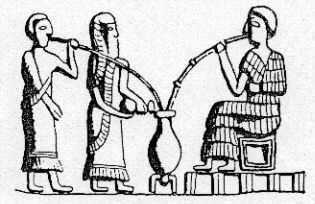
Fig one: wild scenes anticipated at my house when the Sumerian ale is ready.

UPDATE!- Sumerians had fun while drinking. Sometimes too much fun.
Sunday, November 24, 2013

Booze reviews

Stephen Harrod Buhner's book Sacred and Herbal Healing Beers has been something of a classic in brewing circles for years, so perhaps it was inevitable that it would end up in my hot little hands. It is a fascinating book, with satisfying detail about medieval gruit brewing, traditional methods of mashing and sparging beer in Scandinavia, hints at traditional brewing technique in surviving fragments of folk poetry, etc.

But can I make a complaint? The book is full of inaccuracies, and they detract from the authority of the work overall. The Picts were not Scandinavian, nor had the Elder and Younger Eddas were not set in Britain. Lactobacilli is not yeast. Honey takes longer than four weeks to ferment!

The dwarves referred to in the Eddas are almost certainly the Picts...one of the original tribes of Britain.

There is as far as I'm aware no such evidence that the Picts in Britain were the same indigenous people of Scandinavia displaced by the Germanic migrations.

Some commercial brewers in Belgium still use only wild yeasts in their fermentation of lambic... Indigenous beers contain scores more. Numerous species of Pseudomonas, Lactobacillus.... 

The first mistake I put up to lazy writing; this mistake probably is due to the same, but Buhner is a naturopath - this is really the sort of thing he should have picked up on.

Perhaps it's because of little mistakes like this that the recipes can sometimes seem a little questionable too. He tells us to ferment some meads "for 8 to 20 days", which just isn't enough for a mead as he actually explains in very helpful detail elsewhere - although part of the sugar in honey will ferment quite rapidly, the other part will take months to fully ferment. In another special mead recipe - a cyser, a honey and apple mead - he endorses bottle priming bottles (adding sugar when you bottle the mead to encourage a secondary fermentation) which combined with a cavalier approach to fermenting honey could be a recipe for disaster (and by disaster, I mean explosions (which can admittedly be quite fun, and provide anecdotes for the whole family)).

It's worth seeing this all in proportion though. There's lengthy notes on the making of South American corn and millet beers, a sample from the Kalevala providing a sort of origin story about the brewing of the first beer, and recipes for such delicacies as "Nettle Beer", "Wild Lettuce Ale", "Spruce Beer", "Finnish Sahti", "Pine Needle Beer", and many others; he hasn't tried them all but many he has, either in his naturopath practice or just as an enthusiast. And I like his gung-ho approach to brewing and his suspicion of the use of hops (they're a great ingredient but there are plenty of other herbs out there). So it's all in all a pretty awesome book, although perhaps much better for throwing up new ideas about brewing and challenging accepted practices than being a definitive guide. And if there are any other brewers out there reading this who've read and used Buhner, I'd be interested to know what they think.

Thursday, November 21, 2013

The most interactive blog post in the world

Link to the poll of the cat gif of the survey for the image of the chocolate bar


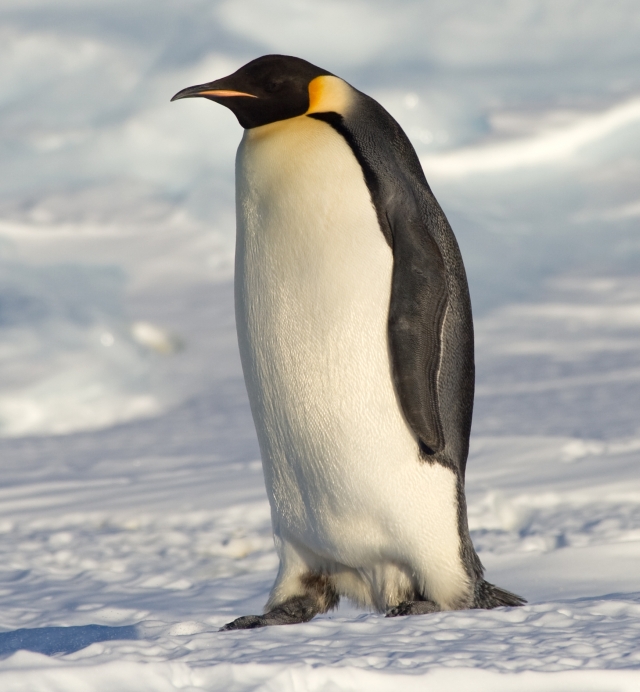
that is a button that leads to the penguin.

Feel free to comment on the link to the poll of the cat gif of survey for the image of the chocolate bar that is a button that leads to the penguin, or the link, or the poll, or the cat gif, or the survey, or the image of the chocolate bar that is a button, or the penguin, in the comments.

Wednesday, November 20, 2013

The greatest Thing ever written

Richard Wagner's Thing cycle is on in Melbourne at the moment, apparently. I only learned because the other day I spoke to Mum on the phone and she asked me when the thing was on and I said "I don't know, I think it's next year", and she told me it was on in a few days and it turned out she was right though of course it makes me wonder why she asked when it was on if she already knew anyway.

Of course, Wagner's Thing is one of the most famous pieces of music ever written, which is why most people today have never heard of it and those who have, like me, probably don't plan to do anything about it anyway. The Thing cycle is so named because it's about a thing. It starts on a river somewhere where some people or maybe just some things are swimming about a thing, which turns out to be the thing that the whole cycle is about, but at this moment it's just a thing, and a elf of pixie or dwarf or somesuch comes along and steals the thing from the other things that are doing things about the thing. Clear so far?

There's a lot of song and dance about the thing*, including up in heaven or somewhere, and a bunch of Valkyries (I should explain, for those who wish to know, Valkyries are I'm not sure) go for a ride. I don't know why they go for a ride but it's something to do with the thing. Then heaven burns down, which has something to do with the thing as well but I wouldn't really know because although I have listened to bits of the Thing I've never listened to the thing all the way through, but it's all very exciting, apparently. Also, incest.

So you can see why a lot of people make quite a thing about the Thing. The Thing has been performed all over the world for over a century,which is certainly something, though I'm not sure what. After all, just compare the historical legacy of Wagner's Thing with the work of a contemporary of his, The Huh, by Someone-or-other. See? Nobody has ever heard The Huh or even knows who Someone-or-other is. And if it has been maliciously suggested from time to time by uncultivated parties that "Wagner's music is better than it sounds", then at least we can say that, and not "Wagner's music isn't better than it doesn't sound", which is what people say about poor old Someone-or-other today. So there is that. Which takes us back again to the thing. Which was.... what was I talking about again?

Ladies and gentlemen, Richard Wagner's Thing.

*Subsequently, critics have made a lot of song and dance about this lot of song and dance.

The underarms of my keyboard

There is so much hair in my keyboard, that by now I am certain that not all of it can have got in there by falling. My keyboard must be growing hair of its own accord. It is clear, my keyboard is undergoing puberty, and soon it will have hairy underarms, a deeper voice and/or breast growth. It is fortunate that I have not undertaken the time-honoured method of cleaning the keyboard by accidentally spilling coffee all over it, as this would only be likely to cause a teenage temper tantrum.

It makes me wonder, though: will I attain a keyboard stage of development, and start developing keys all over my body? It hasn't happened yet.... but you never know.

Tuesday, November 19, 2013

Tyrannical tastes

It occurred to me the other day that it might be a rather fun idea to have a museum or gallery exhibition of artworks collected or favoured by tyrants and dictators all over the planet. Dictators have an artistic taste, all right: a bad one. Saddam Hussein collected science fiction artwork while sponsoring monstrous monuments to himself to bestride city squares and gaze in a visionary fashion out over the desert. Stalin instructed Shostakovich to write music for the people while happily dispatching with large portions of said people on a whim. Later communist leaders cheerfully funded heroic Soviet artworks at the same time filling up their capitals with hideous concrete squares as a convenient means for disposing of the citizenry.

One problem with such an exhibition, of course, would be where to put it all. Sure, you could accommodate a national orchestra here or there, maybe even a crowd doing synchronised dancing for the glory of their dear leader (whoever he or she may be) but what about the "Palace of the People", funded by Rumanian leader Ceausescu, requiring four square miles of Bucharest, including 27 churches and synagogues and countless homes? Perhaps the exhibition could take place in this building, although, come to think of it, the building itself might have to be housed in the proposed Chess City of Kirsan Ilyumzhinov. And there would have to be room for all of the many Presidential palaces belonging to Saddam Hussein, Muammar Gadaffi, and friends - complete with lurid, gold-plated toilets, opulent chandeliers, and replete with the pilfered wealth of their respective lands.

The favourite subject for dictatorial art, inevitably, seems to be the dictator's themselves - as if all the architecture and sculpture and poetry and song of their land inevitably has to emanate from their own glorious form; these would all, of course, find a place at such an exhibition. Think of all those statues of Hussein, and so on. The absolute best example of the dictatorial art genre would have to be the golden statue of Turkmen dictator Sapurmurat Niyazov, which rotated so that it was always facing the sun. The statue was apparently removed in 2006, which is I think rather a pity: it would have been excellent to dry clothes on.

Sunday, November 17, 2013

Sunday arts: portrait of a cat and a chicken

Portrait of a cat and a chicken
Harriet and Griselda
Beneath the outdoor table -
I took a picture with my poem
As soon as I was able. 

The above portrait was drawn by the artist TRAIN, Timothy, on seeing his cat (Harriet) and his chicken (Griselda) sitting together underneath the table. Not feeling that camera or acrylics would do the moment justice, he took the unusual step of using rhyme and meter as his medium. While reflecting some of Train's early influences from the abstract excrementalists and the famous Parisian artistic trio "The Two", it is of primary interest as an early example of Train's middle period*, although admittedly not as famous as his later notorious work "Landscape with Two Onions and a collapsing Neutron Star". Train also prepared for this work with brief sketch:

Light and shade, light and shade, 
Some oblongs and a square.
A blob or two, a splodge will do -
Feathers, whiskers, hair.

*Or perhaps a middling example of his early period, according to some critics.

Thursday, November 14, 2013

(About cheese)

These days, I find that if I want to talk with someone about cheese I have to start the conversation myself. This is odd, as what else would people want to talk about besides cheese? It feels strange having to shoulder the burden of opening conversations (about cheese) entirely on my own, but funnily enough, I find few people have much interest in talking at length (about cheese). As every person skilled in the art of conversation ought to know, cheese is a remarkable subject, which is why I am remarking on it right now; but it is also a delicious one. And, best of all, it is not an easy subject to exhaust: if you eat a cheese, it will eventually disappear; but you can keep on eating the conversation forever: it is the cut-and-come again puddin' of conversation.

Thankfully, you, good people of the internet, have highly developed concentration skills and are able to talk about cheese at great length, too, which is why I feel quite happy to announce to you that I made a slip-coat cheese the other day. This is an announcement I have made a number of times to a number of parties. "I am going to make a slip-coat cheese", I said to the Baron, who was inexplicably at that time still sleeping. "I am making a slip-coat cheese", I said to the lady at the shops, who was at that moment unfortunately distracted by another customer who scandalously actually wanted to buy things. "I made a slip-coat cheese", I said to my mother on the phone, though whether I called her to announce that fact or whether she called me to let me make my glorious announcement who can tell.

At this point in the cheese-based conversation, I was usually surprised by the polite lack of interest of the person being spoken to about cheese. "Just what is a slip-coat cheese", is the question I'm sure they would have asked if they were going to ask a question, but of course I told them anyway: a slip-coat cheese is an old type of English cheese, made from lightly pressed curds and wrapped and rewrapped in cheesecloth several times a day for about a week, until it doesn't stick to the cheesecloth anymore (it "slips" the "coat", in other words); at this point it will be ready. I found a recipe in an old book of recipes (Martha Washington's cookbook, no less), and the notes directed me to several similar recipes in Digby. So between the two of them, I was quite able to develop a workable modern version.

Now I know you're all fascinated by this, so just to make things more interesting, I'll give you the recipe:
2 litres milk, 400 mls cream, 1 tablespoon culture, 1/3 teaspoon rennet dissolved in 1/4 cup non-chlorinated water.
1. Milk milk and cream, heat to about 30 degrees celsius. (Don't worry about being too accurate because I wasn't).
2. Add culture, stir for a minute or so. Keep milk at 30 degrees celsius for an hour. (Stick the mixture in a pot and stick the pot in a sink or larger pot of water that you can keep replenishing to keep the temperature constant. This is more gentle than using a direct heat source like a heat pad; water disperses the heat).
3. Add rennet, stir for a minute or so. Keep milk at 30 degrees for an hour (using method in 2, above).
4. By this time the milk should have clabbered (curdled). Scoop the curds out into a cheesecloth bag and hang to drain for a few hours.
5. Line a cheese mould (or any old plastic pot with holes poked in it so long as it is strong enough to hold the curds) with cheesecloth. Stick the curds in, fold the cloth over the top, put a lid of a jam jar or some shit like that on top, and stick a weight on top of that. Maybe the rest of the jam (still in the jam jar obviously). I dunno, turn the cheese over after a couple of hours if you like to give it a nice shape.
6. Take the cheese out of the mould, rewrap it in a clean cheesecloth, and put it on a board to drain and dry. Keep on turning the cheese and changing the cloth three or four times every day, and when the cheese is ready and has formed a rind on the outside, it will slip out of the cloth without sticking. 

Wasn't that interesting post about cheese interesting? Gee it's great talking about cheese.

Monday, November 11, 2013

A little talk

Every year the Dan O'Connell Saturday poetry readings have a Dead Poets Day where, for once, poets read poems by others, poets who have gone before. The event this year was last Saturday. Because poetry is all about breaking the rules and I'm a rebel man I can do what I want I actually wrote something for the occasion. Not even a poem: a speech.... 

A little talk about Death

Thank you for coming to Dead Poets Day at the Dan. Some of the best poets are dead: there ought to be more of them. Wait. Dead Poets will live on the open stage at the Dan, but only for five minutes. You will have your chance to be temporarily dead in front of a temporarily dead audience who may also be poets. I think that's right. If you enjoy death, you might enjoy poets too, however I would not want to mistakenly suggest that I am making light of the situation and anyway many of the temporarily poetical have later gone to have successful careers as dead people so that's all right I think. Other themes that will feature today: malnutrition, suicide, tuberculosis, and cancer. If you are a fan of these things you may also be a fan of our readers, who have many other talents. Will we all get together in the break and possibly attempt to maybe raise a zombie poet who will hypothetically gorge on the metaphors, rhymes and brains of those of us who have the decency to be politely dead? That will be something fun to look forward to or maybe not. This is going to be a great day, but please don't die. Now A___* is going to kill me and then I will hand the mic over and then the day will begin hooray. Thank you for my time.

*A___ - Dan MC on Saturday.

Saturday, November 09, 2013

Dufflepuds and jiggery pokery: review of Voyage of the Dawn Treader

So last night I finally got to watch Voyage of the Dawn Treader, several years after I bought the DVD and several more after it was released in cinemas. I'm a bit of a C. S. Lewis nut really so it's surprising that I've taken this long to watch it, but perhaps not so surprising that I found the film all wrong.

Now I can understand that the director and writers like to take a bit of liberty with the plot of the books to make them filmable. In Prince Caspian actually I think this all worked superbly - it was a war movie, with many of the key battles being fought by animals: there's nothing more thrilling than seeing an army consisting of leopards and hawks besieging the castle of an enemy by night. Another thing entirely happened in Voyage though; things seem to be going okay when Eustace and Edmund and Lucy are plonked unceremoniously into a Narnian ocean. Eustace is agreeably disagreeable, when they are rescued Edmund suggests "maybe you could throw him back in", and there's a minotaur on board. What? That's not in the book. But anyway, minotaur schminotaur; his inclusion on the boat is not particularly significant to the plot either way, apart from making Eustace faint right at the beginning.

And then they get to the Lone Islands and things start going screwy. Not only do they have to deal with slave holders, but apparently a killer fog right out of John Carpenter. By the time Caspian and Scrubb and the Pevensies win the island back two completely useless characters, for very little reason other than eliciting our sympathies, are forced with a little effort on the scriptwriter's part into the plot and onto the Dawn Treader. Like the minotaur they play a part of very little significance after in the plot, so you wonder why the scriptwriters went to the time and effort in the first place.

Then it's on to the Island of the Dufflepuds (Eustace's transformation into a dragon is reserved for later) and another extraneous plot element is introduced; some jiggery pokery nonsense about the killer fog coming from a Black Island and the seven swords of the seven lost lords being lain on a table being the only way to stop the Black Island from doing whatever it is doing. There's very little explanation and very little reason for this, again, apart from giving the plot more of a generic Hollywood kid's adventure feel.

It's all very strange to me; why lay down a new plot on top of a book that already has a perfectly good plot? Instead of going in search of seven lost lords, Caspian and his mates all of a sudden find themselves picking up the swords, one by one, so they can go on to stop the power of this Black Island. What I really love about the original book is the unfolding sense of discovery, enchantment, and desire - the battles with the slavers and the threat of the Dufflepuds is quickly dispensed with in the first third of Lewis' book, to be replaced by a journey into the unknown; the search for the lost Lords gives it purpose but doesn't detract from (rather, it adds to) the mystery and enchantment. And why, above all, have this stuff about the magical swords - putting a kind of Deus Ex Machina into the plot of a film which already has Deus Ex Machina all over it?

There is, thankfully, a lot of stuff the film does do well: Eustace is a great character and we get a lot of opportunities to see how horrible he is. His transformation into dragon and finally back into boy is good. (It is however much better in the book: when Eustace becomes boy again, Aslan repeatedly leaps upon him and tears the dragon skin off him in an incredibly vivid and visceral scene that demonstrates Lewis's allegory about sin and redemption excellently). Lucy's temptation by the beauty spell (and guilt, and retribution by Aslan) is also good. Several other plot points from the book are dragged together, though they are done so quite skilfully. It all makes you wonder, though: why did they bother with all that magic sword mumbo jumbo? Why fiddle with a perfectly good plot to make it into a slightly less good plot?

Thursday, November 07, 2013

Bibliographopaloozamania

For my sins, today, I was flung into the world of the Chicago Manual of Style, their referencing system and academic bibliographies (is there any other sort?). Academic bibliographies throw up all sorts of wonders: the occasional little pile up of quote marks, with the title of a referenced work referencing the quote of another work - or the author of a non-referenced work being referenced due to a reference to them in a referenced work (if that makes sense), making you wonder whether to reference them or if there are already too many references (yes). The best bits, of course, are where the author of the work that the bibliography is attached to gracefully descends from their authorial heights to reference themselves, in the third person, in the same bibliography: don't we all want to do that, really?

Funnily enough, the very first reference that I had to file away in the bibliography was a real puzzler. It almost drove me insane, and I'm still not sure I tackled it in the correct way. It posed a very particular problem:

How, precisely, does one go about referencing a defunct UK law in the Chicago referencing system? The law in question was a very important law, and led to a very significant circumstance that was mentioned in the work to which the bibliography was appended. It really ought to be mentioned. But how?

Pondering on this, I got a little crazy. Then I got frightened: would I be able to even get past the first reference? Then I got an itchy head. Then I got distracted by a picture of a cat on facebook. Then I got the handy idea of asking everyone else about it. Then I got distracted by all the answers or should that be then I got answered by all the distractions that people came up with. Then I got down a copy of The Chicago Manual of Style, edition 14, that,bizarrely, happened to be on my desk (no, I don't know how it got there, either). Then I got up and got a biscuit. Then I got back in my chair and checked my email. Then I decided: I would reference it in any damn way that I felt like.

But how exactly did I feel like referencing a law again? Not very much, thank you. In the end, I opted for writing the name of the law down in the bibliography, somewhere in the middle. I think I mentioned 'parliament' too, to note that that is where it originated from and give it a lovely sense of variety, adding a homely touch to an otherwise plain computer screen. You're welcome.

Then I got up and got five more biscuits. Gosh, doing bibliographies is hard work.

Tuesday, November 05, 2013

Highbrow eyebrows

Peter Hitchens, brother of the late lamented Christopher Hitchens, has the most fantastic eyebrows. Look at them! Twin hedgerows on the forehead of destiny.

But with great eyebrows comes great responsibility. Can Hitchens really say he has used his eyebrows for good? Heaven help us all if he deploys his fluff in the service of evil.

Here is a picture of former Australian Prime Minister, Bob Menzies, using his eyebrows to devastating effect. We see here a furrow in combination with a lifting of one eyebrow in order to persuade some unnamed minor American official of the splendour of the Australian Commonwealth.


How can we ever have doubted that nice Mr Menzies? In contrast, here is Peter Hitchens weakly attempting to lift a flaccid eyebrow but completely failing in the attempt.


NOT GOOD ENOUGH, HITCHENS. Either learn to use your eyebrows properly, or they will be taken and donated to someone who truly recognises their potential. Use them or lose them, Hitchens. Use them or lose them.

Monday, November 04, 2013

William Shakespeare, Alexander Waugh, hot gay sex, and time machines

"Researching a new book on Shakespeare's sonnets", writes Alexander Waugh (him, the one who came after Auberon (you know, the one who came after Evelyn)) "I stumbled upon an astonishing piece of hitherto unnoticed evidence.... suffice to say that William Covell... revealed in words not especially ambiguous by Elizabethan standards that 'Shakespeare' was a nom de plume used by the courtier poet Edward de Vere". He goes on: ".... almost every intelligent educated person concedes, at very least, that there is a genuine authorship problem".

Crikey! Putting aside the merest hint of the whisper of a likelihood of a possibility that Waugh may just be cranking up a tired old historical theory in order to up sales for his latest book, just what is the "unnoticed evidence" in "words not especially ambiguous", that is, "by Elizabethan standards" that he's referring to? Possibly this:
William Covell’s epistle appended to *Polimanteia, or the meanes lawfull and unlawfull to judge of the fall of a Commonwealth, against the frivolous and foolish conjectures of this age* (1595) which offers a printed marginal note containing “Sweet Shakspeare” near the text “Oxford thou maist extoll thy courte-deare-verse” which of course means Shakespeare is Oxford via an anagram for “courte-deare-verse”.
Er, right ho then. But before we acclaim De Vere as the author of all that play stuff and sonnet stuff and other stuff, the author of that blog post points out that "courte-deare-verse" anagrammatises not only to "our de Vere - a secret", but also many other phrases.

Anyway, after reading this piece by Waugh, I had a little toddle around the sites myself. Like Greg Hunt, I only use the finest evidence Wikipedia has to offer, and it certainly had something to offer in this instance. Shakespeare died in 1616. De Vere, the poor sausage, carked it some 12 years before, in 1604. And turns out that several of Shakespeare's plays - including King Lear, Macbeth, and The Tempest - were written, according to dating by scholars, after 1604. So to write all those plays on the sly, De Vere had to either rise from the grave before putting pen to paper again, or pop into the time machine a month or so before his scheduled death, go forward a couple of years, and write them. Which puts rather a dent in the the "authorship question" that Waugh is trying to fire up, don't you think?

Then again, a fun alternative little theory that Alexander Waugh might like to entertain is that Shakespeare had hot gay sex with Edward de Vere, wrote about it at length in his sonnets, and had this William Covell chap hint at it as a shared secret in his book. What do you reckon? Such a lubricious detail might help to sell a few copies of the latest work from the Waugh clan too....

Saturday, November 02, 2013

Considered reflections on the occurrence of Spring Racing Carnival

Or, a grown up nursery rhyme
Horsey worsey horsey worsey horsey worsey gallopatrot
Drink a shandy drink a brandy get quite randy
Horsey worsey gallopatrot
Snog your partner pash your cash smooch your hooch and drink a lot
Horsey worsey horsey worsey horsey worsey gallopatrot
Champagne bubbles boyfriend troubles grumble rumble fumble fall apart -
Horsey worsey gallopatrot
Evening over spew all over so hungover
Horsey worsey horsey worsey horsey worsey gallopatrot
Gallopatrot gallopatrot gallopatrot
Stop. 
Email: timhtrain - at - yahoo.com.au

eXTReMe Tracker

Blog Archive