kidattypewriter

Tuesday, August 27, 2013

The tumbleweeds of the underbed, and other hairy topics

Perhaps it is because people, collectively, have much less hair than just about any other mammal wandering about that we spend so much time fretting about it, fretting about not having it, fretting about what to do with it, fretting about how to get more of it, or fretting about how much of it we should get rid of even if nature has done most of the job for us already. Witness the eternal debates about underarm hair, leg hair, beards, moustaches, etc, etc.

Since every person on the world seemingly has a position on hair I have a position on hair too. My position is this: I rather like it. I am interested in the fact that we have less of it than almost all other mammals: how did that happen? Shouldn't that mean we are biologically conditioned to think of ourselves as genetic freaks? And the bits of hair that we did keep fascinate me even more: why did we keep them? Did we make a collective decision as a species to keep head hair, and the odd bit of pubic hair after that? Why is it that men have beards and women don't?

I like hair words: oxter, vellus, hirsute, pogonology. I like all sorts of pubic hair, but especially (pardon my vanity) beards: I like the way our body develops these little forests and groves; their presence seems to provide an appropriate balance and variety to the body - some skin here, some hair there. I like the way a beard can hold objects, pens, pencils, even the odd carrot; and I like being able to thoughtfully yet absent-mindedly rub my beard whenever I feel like it. Why do some centuries like beards and others do not? In the Victorian age, men were required to have a beard, full and flowing; in some cases it was compulsory*. Beards were out in the first half of the twentieth century, and then in for a brief period in the sixties and seventies, and then out again until today.

I even like fake hair: wigs and toupees are a wonderful thing, even - and especially - when they are wigs for pubic hair, merkins and the like. I like how the whole of Western Europe, for a period of some hundred years, became crazy about wigs, so that the sight of a person not in a wig would have been regarded as appalling. How did that happen? Was there an original wig model, a person with wig-like hair, that proved inspiring to the several generations of people that came after him? I like the extravagance that accompanied many hairstyles in the 18th and 19th century with, for instance, patriotic Parisian ladies having their head styled up to resemble great naval battles.


Even if hair is a small subject, it is not a subject that is small; you could go on and on about hair, and truthfully, there is not as little of it on our bodies as we might think. Vellus hair is tiny, fine hair that grows all over our bodies, on both men and women, children and adults. There is even, I discovered to my pleasure some time ago, a special hair for newborn babies and foetuses, lanugo hair, which is eventually replaced by vellus.

If there is anything better than hair on the young, it is hair on the old; I like the dignified tonsure that an ageing gentleman who has been slowly growing old gains as he loses his hair. When they led the Tory Party in the UK, both Ian Duncan Smith and William Hague had this tonsure, and I wondered how the British people told them apart. I also like how some people's hair slowly ripens from brown to a gentle grey to white; this is the kind of family that I come from, and indeed, that process is happening as we speak - though principally on my head and beard; my pubic hair doesn't seem to be ripening nearly so quickly. Indeed, the colour of my pubic hair seems to be quite different to the colour of my head hair, and I wonder if this is the same for everyone. Can red heads have red pubic hair? Or blondes have blonde pubic hair (the idea does seem rather strange)?

Animal hair is fascinating, too, and I like comparing notes with the cats about our whiskers. Cats apparently use their whiskers for balance and measuring up distances; I once heard a story about a poor cat who had its whiskers thoughtfully snipped off as part of a an early experiment in hairdressing, and who had to wait months for the same whiskers to grow back before daring to jump again. I am afraid to say that my beard does nothing whatsoever for my balance, although perhaps this was not the case for upright moustache bearers such as Lord Kitchener.


And I like the way hair detaches from one's body eventually, and floats around the house or the world, perhaps minutely altering the composition of some soup or cheese, maybe finding other hairs to mesh and play with until it forms Slut's Wool, the tumbleweeds of the underbed. So you see, there is very little that could be said about hair, but only because there is too much to talk about in any one conversation. Hair. I like it. 


*I read somewhere that the British army regarded the beard as a protection against the inclement weather, and I find from personal experience that this is true: I'm never troubled by my beard on hot days, but it insulates my face wonderfully against water and other liquids.

Melancholy thoughts upon the approaching spring

The sadly inevitable coming of spring would not be half so depressing but for the fact that so many people hereabouts seem to be actually looking forward to it. "Spring is in the air!" "Hooray!" and other dismal epithets abound. The very little winter that we are able to enjoy in Australia is sorrowfully insubstantial, with few showers, no snow, not as many grey clouds as one might reasonably wish for, and it is all over in a pitifully short time. This is bad enough; but the end of winter also heralds the coming blight of summer - bushfires, 40 plus degree days, and doubtless an influx of young sorts rushing hither and yon under the illusory impression that they are happy.

It is unfortunate in the extreme that, although Australia has inherited many good things from the British - a fine language, parliamentary democracy, the sport of cricket, and a certain propensity towards sombre grey-stoned architecture - the British climate is not one of those things. I'm not quite certain how this can have happened, but it seems to me an oversight on the part of our early Colonial Governors; one wishes that our formative Prime Ministers - Deakin, perhaps, or Barton - could have busied themselves with parliamentary statutes limiting the length and extent of our summers, perhaps, or importing English autumn and winter days where appropriate - but sadly, they have not. It is not simply that such a high-minded and forward-thinking approach would have made life here more comfortable; but it would have made it so much more productive. Autumn and winter are excellent seasons for just about all the good things in life that one could wish for: beer and wine brewing and cheese making. They also afford plentiful opportunity for the eating of porridge and pudding and scones and cakes, and for the occasional promenade around the house in a magnificent dressing gown. The seasons are also highly beneficial for domestic felicity: cats become less inclined to go outside, more predisposed to a cuddle, and are on the whole much friendlier with you and with one another. And, for some reason, it seems to make other people much grumpier and more sorrowful, which is also a plus.

It is probably too much to hope for any change to this appalling state of affairs. We could wish for an education about how nice autumn and winter are - there could be frequent readings of Keats ('Season of mists and mellow fruitfulness', etc) for instance - but it is likely thanks to public education that this rot about summer being wonderful, winter being horrible, started. They may not even teach kids about the 10 Major and 99 Minor Disappointments of Life anymore.

So the world is getting worse and we cannot do anything about it: the best we can do is ruefully admire the masses of gloomy clouds that hang in the Melbourne skies while there is still time. It should help to ease the pain, a bit.

Sunday, August 25, 2013

Taking literally laterally

I was literally sitting down a few minutes ago when the news that "According to the dictionary, "literally" now also means "figuratively"" hove figuratively into view.

At first, I wasn't sure how to take the news. Now that "literally" literally means "figuratively", does "figuratively" also get to literally mean "literally"? Literally? Does this also mean that "literally" figuratively means "figuratively" and "figuratively" figuratively means "literally", or would that be literally taking a figurative, er, figure of speech too far? Could I even trust the literal seat that I was literally sitting down upon anymore? Just how literally figurative are we supposed to take this figuratively literal equivalence, anyway?

Personally, I literally had ants in my pants, was jumping for joy, and was over the moon about this. But figuratively? Well - I suppose I was quite excited.

Stand by for the Clive James centrespread

I'm confused. Okay, I'm always confused and I'm confused about my confusion even more than that, and while my general state of quizzical befuddlement and bemused confuzzlement varies from day to day, I usually start the day off knowing nothing about anything and end the same day knowing even less. Today, my state of confusion, quizzicality, befuddlement, bemusement, and confuzzlement is directed at the brave activists at Honi Soit, the old student rag at my old alma mater, who apparently simultaneously decided to take a photograph of their vulvas and publish it on the cover and withdraw that same edition. Actually, the details are a little vague, but the decision to publish the cover and then withdraw the same cover was apparently taken by the one person, editor-in-chief Hannah Ryan, which makes it all the more of a head-scratcher when you read this piece, by an unnamed Honi writer, protesting against the censorship that it turns out they have undertaken themselves.

But that's hardly all, indeed, a university student paper getting into trouble, or perhaps getting itself in trouble for not getting into trouble, is hardly news. But the confusion multiples, it grows, it keeps coming in great tidal waves of confusion. What exactly was the cover protesting? Surely not the commodification of women's bodies, because mass producing images of vulvas like this - 18 per cover, hundreds of copies of Honi going to print (and then being pulled (but being put all over the net anyway)) is a perfect example of said commodification. Perhaps the cover has an educational purpose, because as one of the writers says, "Until I saw the uncensored versions of the vaginas, I didn’t even realise myself how different they could be." But to present them in this format, disembodied and impersonal - doesn't this kindasorta encourage the objectification of women? Or are we not worrying about that anymore? Will the cover change anything, help anyone, educate girls and liberate women? Is it actually raising consciousness or just encouraging future students to take their clothes off, take photos of their bits, and publish them? Is that good or bad or neither or either or something else entirely? Just how exactly is today's activism much different from yesterday's exhibitionism or tomorrow's participating in the evil patriarchal capitalist hegemony? And for the sake of gender equality, should we perhaps imagine former editors like Charles Firth, Robert Hughes, or Clive James naked as well? Do we really have to?

It's all become a bit of a blur to me, what's right and what's wrong and what to publish and what not. I don't know: if anyone needs me, I suppose I'll be forcing myself to google pics of James supine and naked and fleshy in his London flat: you'll be able to tell where I am by the gently tender yet horrified screaming.

Friday, August 23, 2013

The faintest odour of chocolate with a hint of chocolate

The Baron and I just ate a fine vintage of Freddo Frog. Up until this point I hadn't even been aware that Freddo could have a vintage, but then the Baron bit into her chocolate and said "Freddo tastes good today", and I said "but how could it taste any different from any other Freddo?" and bit into my Freddo and THE BARON WAS ABSOLUTELY RIGHT.

2013 was a good year for Freddo. Vignerons, or whatever the chocolate equivalent of vignerons is, take note.

Thursday, August 22, 2013

A perfectly normal post by a perfectly normal person

This morning I put Barry in the fridge. "There you go, Barry," I said soothingly. "It's all right now." I like to think Barry understood what I was saying, but I'm sentimental like that.

Now I know what you're all thinking, but Barry was two weeks old yesterday. It was high time he went in there. Previously I'd just been keeping little two-week old Barry in my cupboard. What? No, of course I took care of him. I gave him an old towel and all to keep him warm and talked to him soothingly to give him sweet dreams. (Why are you all staring at me like that?)

What? No no no no no no. Barry's not a person. Jeeze. No, Barry is my two week old lager beer, sheesh, I mean, come on people, everyone knows you have to give lager beer a secondary fermentation at 0-3 degrees.

So there you go: Grown Man Keeps Beer In Cupboard, Gives It Towel To Keep It Warm, Tenderly Speaks To It Every Night, and Gives It Name Of Person. Perfectly normal. And besides,it ought to be perfectly clear you don't ferment babies like that.

Saturday, August 17, 2013

TRUTH IN LABELLING STUDY: Arnott's Nice biscuits


For today's Truth In Labelling Study, we examine Arnott's Nice biscuits. Are Arnott's Nice biscuits actually nice biscuits at all? If they don't actually taste nice, it would be wrong to continue calling these not-nice biscuits Nice biscuits, as the very name Nice would suggest that a certain niceness would be inherent in the experience of eating them. Why, the biscuits might be downright nasty, which would be the complete antithesis of nice, which would mean that it would be more appropriate to call the biscuits 'Not-Nice biscuits' or 'Yucky biscuits'. On the other hand, what if Nice biscuits are actually delicious, a sublime gastronomic experience that makes your taste buds tingle and causes you to spontaneously enter a rapturous state in which the meaning of life, the universe and everything becomes clear? Then, too, it would be wrong to call these sublimely delicious biscuits Nice biscuits, as although you wouldn't exactly be disappointed, you might be disappointed by the lack of disappointment. So it is quite important that Nice biscuits are actually nice, I think you'll agree.

To test the niceness or not-niceness of Nice biscuits, recently we bought a packet and gave it a taste test. The Nice biscuits were actually not terrible, but not wonderful either, being pleasing without actually being so pleasing that they were biscuits you might actually want to keep on buying all the time. Nice biscuits actually are nice.

STATUS: TRUE.

Next week, we stay in the biscuit world and test Arnott's Scotch Finger biscuits. Are the biscuits actually made out of the fingers of Scotch people? Stay tuned for the next exciting installment!

Friday, August 16, 2013

How to ferment everything from your moustache to the flatulence of a goat to the next-door neighbour's baby

In 1991 Sandor Katz contracted HIV and, looking for a change of life, went to live at a cooperative queer homestead in the woods. He milked goats, made cheese, and did whatever you do to cabbages to make them turn into sauerkraut. At some point between then and now he released the book Wild Fermentation and The Art of Fermentation (which last sits in a big fat satisfying lump on my desk) and became, in other people's words, a 'fermentation revivalist' or 'fermentation guru'.

Though maybe he's just an enthusiast. He's certainly enthusiastic about fermentation; there are copious notes in TAOF about fermenting vegetables, meat, fish, milk, growing mould, and performing various other miraculous acts with the aid of various microorganisms, which microrganisms he is very enthusiastic about indeed. He starts off the book with a paean to bacteria and how we interact with them, and goes on to talk about fermentation in reproduction, fermentation 'as a co-evolutionary force' (whatever co-evolutionary means), not to mention agriculture, waste management, and 'skin-care and aromatherapy'. Look, I skipped most of that stuff; this is the sort of book where you (and by 'you' I mean 'me') skip most of the pages and go to your favourite bits.Who cares about aromatherapy when there are generous chapters devoted to cheese making, wines, and beer?

It's all quite fun and less scientific than it sounds; a lot of passages are devoted to Katz's favourite things to ferment - he likes mead and talks about his friend, plant explorer Frank Cook, who he bonds with 'over our shared passion for mead making'. He explains how he used to crush fruits in his meads to start the fermentation, but stopped 'after my biodynamic farmer friend Jeff Poppen explained the philosophy of fermenting fruit: "It's the essence of the fruit you want, not the substance."' Some of the best stories are from friends and readers of his previous book, like the one from the lady who ferments cider by putting apple juice in a bucket underneath the table and letting wild yeast get into it. Katz also tells a story about a friend who is making a Finnish yoghurt culture, vilii, which culture expands and becomes exceedingly gelatinous when it curdles - his friend pours it into a bowl overnight and when he comes back in the morning, finds that the mixture, has pulled itself entirely out of the brimming bowl onto the bench.

Katz claims, unironically, that 'Meads can possess many powerful and magical botanical qualities' and 'Through fermentation, we can reconnect ourselves to the broader web of life, in spirit and in essence, as well as the physical plane'. I don't know about all that, but that's nothing compared to the book Sacred and Herbal Healing Beers (which has become a kind of brewing classic), quoted in here: 'To do so means reconnecting to the ancient tradition of fermentation - to connect to the thousands of wise women and wise men standing over their brewing vessels in small villages around the world calling on the spirits of fermentation to come to the wort and kindle the fire in it'. (The book also suggests that we use a magical stick in our brew each time as a way of calling on those 'spirits').

And I do like Katz's generous approach and his view that the environment for fermentation should be 'clean, not sterile'; he really likes to encourage bacteria. I especially like the excitement with which he describes the process of microbial alteration that goes on in fermentation, and the relish he takes in the food and drink that results. If you read around in some of the other books about beer making or cheese making you'll find they all talk with such fear of microbial infection; mostly, Katz doesn't worry about that. He suggests leaving cultures out in the open and leaving lids off pots to catch any wild yeast that drifts by, discusses the cultivation of bacterial cultures in sauerkrauts with love and tenderness, and you can just imagine the gusto with which he eats the same bacteria. It's not a book for people who get queasy at the thought of anything that's not pasteurised, homogenised, or sterilised beyond recognition, that's for sure.


Not that I want to use it to encourage you all to cultivate bacterias or microflora as pets, mind. And not that I'm saying I'll do the same. But at the moment I have cheese culture in the freezer, a lager beer fermenting away in the cupboard that I call 'Barry', and four other beers in the study that get tenderly wrapped up in a blankie every night. So, maybe if you are the sort to read a book like this, then....

Sunday, August 11, 2013

On the other hand

There's nothing like stopping at the shop counter at the natural food store with a hat in your hand and a bag in your other hand while retrieving the card you used to pay with your other hand and placing the items in your bag with your other hand to make you realise just how useful a third hand would be. Amongst other things, it would excuse the awkward necessity of you having to put your hat on your head while retrieving your card before taking your hat off your head again and putting the items you have just bought in the bag in your other hand before slinging that bag over your back and placing your hat on your head, by which time the queue behind you will have doubled and the awkward smile on the face of you and the shop assistant will have been replaced by awkward glowers of cantankerousness on faces of same.

Then again, there's nothing like stopping to chat on the phone to your mother while you are also involved in an extremely complicated cooking project in which it is extremely necessary to do things exactly in the right way and precisely in the correct order for everything to turn out properly to make you realise that it would not only be efficacious to have a third hand, but it would also be highly desirable to have a second head as well, with which other head you would be able to concentrate not only on talking to your mother but also on the meal you are cooking and make sure everything turns out all right by deftly using the third hand you have discovered whilst at the shops to do whatever stirring, pouring, dividing, separating, and so on, the third hand is required to do.

On the other hand, there's nothing like having a third hand and a second hand to make you look like the undesirable mutation of a freak genetic modification experiment gone wrong. Which might actually be quite fun to look like at the natural food store.

I'm sure you've all felt like this from time to time.

An edifying Sunday evening post

As you may know, I am a supporter of the wearing of ties on the weekend. Unsurprising, then, that I ended up living in Lalor, a suburb where a large proportion of the retired male populace seem to like nothing better than to get dressed up in a nice tweed jacket and a trim hat before catching the train. It seems to me highly likely that these gentlemen, who may also be seen at the shops or playing cards with one another in long, dimly-lit parlours over huge round tables, may indeed have emigrated to Australia for that specific purpose: "come to Australia! The land where you can wear a suit and tie to the train station all you like!" Well, that would do it for me.

Why is it that we have come to have a prejudice against men wearing ties? Personally I have a prejudice against men who do not wear ties: a photograph of a beaming, clean-cut politician* in shirt and suit, but without a tie does not say "fresh!" and "new!" to me. Rather, it bespeaks a certain dishonesty and it looks like the fellow is a little simple minded: if they can't manage a simple piece of neck wear, what else can't they manage?

What could be more edifying than ties? Firstly, there is pleasure in the very act of knotting them; the astute student can devote many hours to learning the tie knots. At the moment, I know two - the  co-half-Windsor and the Balthus - and am learning a third, the Cavendish. My fall-back knot is the co-half-Windsor (Mum taught it to me years ago, and for years I assumed there wasn't any other tie knot); the Balthus has a pleasing name and there is a lovely symmetry to its knotting pattern, with the end knot being superbly fat; qualities which seem to be shared by the Cavendish. I have also tried the Windsor, but - as the Encyclopaedia of Tie Knots informs me - "In the Ian Fleming novels, Bond thinks the Windsor knot is 'the mark of the cad'" and notes that it is chosen by "Huge Chavez, Putin and the Chinese leaders Jiang Zemin and Hu Jiantao": and I didn't feel good about it. Of the other knots, I have also tried the St Andrew, and the Pratt (aka Shelby), (both for their names), while being also attracted to the extreme simplicity of the Oriental and the four-in-hand.Aside from these, I have also learned (and forgotten (and learned again)) the bow tie knot, a skill that frequently finds its way into those lists of 'things every man should know'. Bow ties, I find, are essential wear when you're just popping down to Coles to buy a little something: it's always interesting seeing how the person at the checkout reacts. Other places and times to wear bow ties are to the shopping plaza, or just while going for a walk along the back lanes of your suburb.

Neck ties in general are excellent for wearing around the house (along with the rest of the domestic flaneur outfit, tracky dacks and a mucky dressing gown with a hanky falling out of one pocket), and can sometimes be used to tease the cats. They create a wonderful impression when someone knocks at the door. Or, of course, they can be worn for jolly jaunts into the countryside, or just going on random trips on the train.

As to other questions of tie fashion, I am generally laissez faire. Some people like to tuck away the tapered end of the tie into one's shirt, or attach it onto the little pocket on the back of one's tie; personally, I like to let it flap loose, but to each his own. Patterns are good, but stripey ones generally catch my eye, and I quite like oranges and reds; and of course you just can't go past good old Paisley. I don't think I actually have a spotty tie, but just thinking about patterns now reminds me how years ago, while loitering in a Salvation Army store in a small country town with my parents while on holiday, I spotted a white tie with pink polka dots (or was it the other way around?) and teased Dad saying I'd buy it for him. He eyed it dubiously and said that I'd better bloody well not. He may also have used the word "revolting". Thinking back now, I can't fault his description of the tie in question (it was pretty out there). Even so, I regret not buying that "revolting" specimen: it would be fantastic for when the Mormons come knocking.

*I won't mention any names but let's just say the Greens do this a lot. 

Wednesday, August 07, 2013

A very forward crossword

"Crosswords won't cut it", announces the SMH. "orgasms are key to a healthy brain".

Well now. Depends on the crossword, dunnit?

 CLUES:
1. Ooh! Sings twice! Saucy!
2. Take a roll in the hay, right?
3. What did the two chaps have behind the milk bar?
4. Ice sex, minus one, is becoming to officials in short.
5. Close draw for pyjamas! 
6. It takes this to tango.
7. A low slip for bed clothes.

Unfortunately I'm too young to know the answers, or I'd tell you them, for sure.

Tuesday, August 06, 2013

From dunny to din dins, or, there and back again

As you will probably be aware, I have a lot of latest obsessions. Beer, cheese, origami, cheesy origami beer, you name it, I'm obsessed with it. Well my latest latest obsession is toilets - though actually I must admit toilets have been my latest obsession forever. Victorian toilets, Melbourne's underground toilets, a possible business venture taking visitors to Melbourne on tours around Melbourne's best toilets, the toilets in the Astor Movie Theatre, the Sun Picture Theatre, the Windsor Theatre, at Mordialloc Station, and underground on Plenty Road in Preston, the decor and design in said toilets - I've thought about it all at length. I've even periodically thought about launching books or just having roving poetry readings in Melbourne's better toilets, which would be great except half the audience would be shut out.

So I'm rather peeved to see this story (via PWAF), indicating that Sydney has stolen a march on Melbourne in the toilet stakes.
They are seedy and entirely unlovely, redolent of graffiti, urine and filth. But three vacant Sydney toilet blocks may soon be occupied under a plan to turn them into cafes...The City of Sydney has been fielding offers from cafe operators to take over decommissioned public toilets at Taylor Square, Belmore Park near Central Station, and Hickson Road at Millers Point. - The latte lavatories: old toilet blocks facing a cafe makeover
Of course the author gets it quite wrong. The pictured dunnies are entirely respectable, greatly preferable to the stainless steel electrical affairs that city councils use today.

And it's not as if the hosts of these houses of convenience would even have to hide their history. Au contraire; I think they should celebrate it. The cistern could easily be converted into an espresso machine. The metal walls could be polished until they are gleaming and new, and used to hang items of cutlery. The flush chains dangling from the ceiling could be converted into bells to ding when a meal is done. Wall urinals, if any, could be either converted into comfortable seats with the use of a few throw cushions, or receptacles for customer bags. Separate chambers into which people used to retire could be fitted out with a table with a cheery cloth and turned into booths for customers to have quiet conversations. Floor tiles could be polished, happy bouquets of flowers hung from the wall, and it would indeed be a rich cultural experience for all concerned!

Although at some point a customer might actually want to take a piss. No matter: turn them out onto the grassy area with a plastic bag and a '10 per cent off your next purchase' voucher and that problem is easily fixed, too. What a business opportunity these blocks could make!

Monday, August 05, 2013

Supernews! Death causes cancer

EVERYWHERE, MONDAY.
Concerns have been raised amongst the community of concerned people following scientific revelations by scientists that death could be carcinogenic.

The possible link between death and cancer has rocked society. "We thought death was harmless," cried one concerned citizen, "apart from it killing people, of course, which as we all know is just a part of life."

Steps have already been taken to curb the incidence of the powerful cancer-causing phenomenon, with the government making moves to "ban death" or at least redistribute the incidence of death amongst society so that poor people are not adversely affected by the rates of cancer it may cause.

The announcement that death may cause cancer follows similar revelations that cigarettes, alcohol, drugs, animals, oygen, water, books, children, the elderly, stress, and everything are also amongst the list of cancer-causing items. Indeed, since cancer causes death which causes cancer, it is only a matter of time before the shattering discovery that cancer causes cancer is made, further elevating the concerns amongst the community of concerned people and rocking the medical world.

This has been another edition of Supernews!

Friday, August 02, 2013

Rigidly repressing my lack of emotions

Man! Manly! Manly men! I'm fuddy-duddyish enough to think that the word 'man' is not only a simple way to describe one gender but is still a perfectly good word to describe the whole of homo sapiens. Good luck with that argument in today's internet, where the generic term is now even more generic than it used to be: we're all 'people', thank you very much.

But anyway. That aside, it seems you can't go anywhere these days without a man mansplaining man-flu to another manly man while trying hard not to hurt his man-feelings, all of which things are things, even when (in the case of man-flu and man-feelings) they're not really. That doesn't make much sense. Nor does the fact that He-Man, who (as his name would suggest) is a very manly man indeed but in spite of the virile masculinity exerting from his every testosterone-drenched pore, doesn't seem to have any pubic hair at all. What's with that, He-Man?

Speaking of man-flu and man-feelings, I was reading this article the other day about a 'crisis of manhood'. (There can be few greater pleasures in a man's day than reading about a 'crisis', or even better a 'scandal' or, best of all, 'a catastrophe about to engulf us all'; it gives me such a pleasing tingle in my man-pleasure centre.) It seems filmmaker Jennifer Siebel Newsom is finishing off a documentary about "the myths of modern manhood" and is looking for "finishing funds" on Kickstarter. "It shouldn’t need to be said, but here goes once more for old time’s sake: masculinity is a feminist issue", writes Clem Bastow, "The model of masculinity that insists that men are not allowed to feel or show emotion is a patriarchal construct. And isn’t the patriarchy what we all banded together to fight in the first place?"

Speak for yourself, Bastow, I reckon. Personally I like nothing more than a bit of good old fashioned emotional repression, a spot of not-talking-about-my-feelings, and a reviving dose of bottling-it-all-up. Why would I talk about my feelings when I can just let my feelings get on and feel things anyway? It seems much more efficient that way. Plus, I have an inkling that getting someone like me to talk about my feelings would be a fraught exercise at best - like the Catholic kid in the confessional inventing sins as a better exchange for the mundane sins that they have actually committed (and/or completely forgotten about) , I reckon I'd just get an urge to start making stuff up. Of course it's hard to compete, poetically speaking, with the likes of Shelley - "I fall upon the thorns of life, I bleed!" - but I'm sure I could work my way up to it.

Talk about my feelings? I've never heard greater nonsense in my life. It seems to me there's an element of prescriptive psychology about all this: filmmaker Newsom, having determined that the lack of emotions that boys are rigidly repressing are wrong, has set out to talk to a bunch of psychologists and sociologists and teachers who think they know what the right emotions are that boys should be experiencing. The end result may not be a society of emotionally articulate men - it may be a society of men acting out emotions to get responses from others.

That's enough out of me. I've got to rigidly repress ten more emotions before dinner, and I've hardly begun on the first one. 

Monday, July 29, 2013

Not that we're Nazis or anything

Contrary to popular prejudice, the Great Escape did not happen some six decades ago in Germany. It happened yesterday. In our own front yard. Two Australorp chickens (not World War II detainees) were involved, who I will from henceforth refer to as the Australorps, because they are.

It also happened this morning, about 11 o'clock. Also this morning at 11.30. I haven't checked lately but they might be at it again. In fact, with these Australorps it's the Great Escape all day, every day.

Various methods have been tried to get the Australorps back home. Sometimes I round them up with a stick and get them to walk back to the house (often involving me leaping over the fence into the front yard of some neighbour who has barely had time to adjust themselves to the strange chickens foraging in their yard, much less the strange man who has just joined them). Alternatively, the Baron and I have also tried enticing them out of the garden they're not supposed to be in with food - which is rather like trying to tempt a kid out of a pavlova factory with a bit of meringue. Yesterday, just for a change, I tried having a tantrum. I can't say for sure whether it worked, I'll have to try that one again. I'm sure I'll have the opportunity to do so.

I understand that other Great Escape - the one they made a movie and stuff about - involved troopers and Tommy guns and motorbikes and all sorts of cool stuff like that. I haven't got to that stage yet with the Australorps, but I'm pretty sure I'm building up to it.

Wednesday, July 24, 2013

Sing a song of punctuation

To be or not to be
Eg or not eg
ie, that is, i.e.,
QE, to sum up, D.

2B or 2B not,
--- or ...?
Colons: single; or semi?
Double “”, or demi?

PS or BTW,
+ also ;)

Monday, July 22, 2013

Poetic grizzle

A few months ago I submitted a short poem about Thomastown to Red Room's Disappearing project - the idea of it was for poets to write something about an Australian place that had changed over time. Also some stuff about 'providing a digital map of Australia', etc. Anyway, they asked for a small biography and short written statement describing the area, explaining why I chose it to write about, which is where I should have really started being suspicious: the poem that I submitted turned out to be far shorter than my written description. Check it out -

Thomastown

Land of roller blinds and smash repairs
And garden gnomes and thinning hairs.

Of course it didn't get published. Red Room seems to view itself rather like an art gallery for poetry. Pop into an art gallery these days and often the artists' notes and biography and the descriptions of the artworks are more significant than the artworks themselves. (The most egregious example of this I can think of is an exhibition I saw in Newcastle Art Gallery once - the artist had taken a picture of an unremarkable corner of the park just outside the gallery, then printed it digitally in a blue wash, a green wash, etc. The same picture, slightly digitally altered, was hung up all around the room. Beneath one of the pictures was several sheets of A4 paper stapled together, in which the artist had written a gigantic essay about the meaning and significance of their meaningless and insignificant work.)

I suppose this is starting to sound a bit like an 'I didn't get published and so they're bad!' grizzle from me. Because it is, obviously. But I also think I have a point: if the idea is to explain the poetry and let us get to know some of the poets, then the effect is almost to give precedence to the explanation, like a kid writing an essay on Shakespeare without even reading Shakespeare first. (C S Lewis saw this sort of development early on, writing in his essay Lilies that Fester about how the state teaches children appreciation of literature, not being content to let kids read and write and appreciate literature for themselves).

Anyway, some of the poems are online. Here's one. Here's another. And here's a third. The poems are all right and the poets aren't bad either. How's that for appreciation!

Thursday, July 18, 2013

Think for the day goes thunk

Spurtles are ace and you've got to use them to make you morning porridge because tradition and stuff, but every time you get to the point where you have to ladle out the porridge from the pot to the bowl you realise a little addition to the traditional spurtle design wouldn't go astray: an oblong on the end, designed for the specific purposes of ladling out porridge. This device could combine the traditional stirring powers of the spurtle with the modern ladling powers of, well, the ladle.

Maybe I could make one and patent it? I'd call it, I dunno, a Spurtle Plus Oblong On Nether, or S.P.O.O.N...

Tuesday, July 16, 2013

In which Tim examines the news

So I was just reading the news the other day, and apparently it's now illegal to abort babies masturbating in the womb in Texas because.... no, wait. I think I got that wrong.

Anyway, I was just reading the news a while back and it seems that it's illegal to abort gay babies masturbating in the womb unless they're in Texas, in which case it's compuls.... no hang on. Still haven't got it right.

So opened the internet the other day and started reading the news. It seems it's now illegal for babies to masturbate in the womb of pregnant gay fathers unless they're Texans because.... er, that doesn't sound right either.

So here's how it is, spot of news the other day. Gay Texans are now not allowed to masturbate in the womb, unless they've been aborted first, which is.... hang on, aborted masturbators are now not allowed in gay Texas because... no, it's been made illegal to teach masturbation to aborted Texans unless they're gay, in which case .... um.... that is....

Oh, bloody hell! Gay! Abortion! Masturbation! Womb! There's your freaking news for you. 

Ow is the winter of ow discontent

I'm currently toying with the idea of a television series spin-off from Masterchef - I call it Disasterchef. Not, as the name might suggest, involving cooks engaging in culinary feats of derring do in the middle of earthquakes or bushfires or volcanic eruptions and the like - though then again that idea has merit too - and not actually involving any chefs either. It would just have me. In my kitchen. Because, let me tell you, there's plenty of disasters waiting to happen.

A week or so ago I burnt my wrist while re-lighting the stove. To top that off, just a few days after that, I grated my middle finger along with some cheese. Not to be outdone, just two days ago I was waxing my cheese - waxing is always a disaster when I'm involved - and foolishly poured all of the hot wax into a plastic container, clearly because I thought the kitchen was far too clean. The wax predictably melted a hole right in the bottom of the container and spilled all over the floor, and, being red, the kitchen soon resembled a particularly charnel scene at the hospital. And, just today, opening a can of Minestrone soup, I (ow) cut my (ow) other middle finger (ow) so that (ow) now every (ow) word (ow) I (ow) type (ow) reminds (ow) me (ow) of it (ow) and I'm not even (ow) sure (ow) what I'm (ow) doing at this keyboard any(ow)more.

Honestly, it's getting so between the blood-coloured red wax, the blood-coloured minestrone soup, and the blood-coloured, um, blood, I can't even see the kitchen anymore.

Sunday, July 14, 2013

Points for discussion

Calm down! How dare anyone tell me to 'calm down' at a time when the last thing I want to do is calm down! I refuse to calm down about the subject at hand especially when the subject at hand is being told to 'calm down', which is the most uncalming down thing to be told if I actually wanted to calm down! HOW CAN YOU TELL ME TO 'CALM DOWN' AT A TIME LIKE THIS?

Outraged? It's outrageous that I be described as outraged, even if and especially when I am actually outraged about something! I deserve my right to be outraged about something without being described as outraged, even if I am just outraged about being described as 'outraged' without the initial outrage leading to the description of 'outraged' actually being an outrage at anything at all, that is, anything apart from perhaps another description of me as being 'outraged', which of course and naturally is an outrageously outrageous way to describe someone as being.


Calm down about being called 'outraged' over my outrage over being told to 'calm down'? How could anyone ever dare to describe me as being 'outraged' over being told to calm down, it is not a very calming down thing at all, it is the very opposite of calming, it is outraging, it is umbragelous, it is horripilating, it is prepostifulish, it is an absolute scandal, it is utterly disgusting and completely shameful and shamefully outrageously scandalously utter, it is just wrong I tell you and what were we talking about oh yes I will certainly get outraged about being told to 'calm down' over being described as 'outraged' about calming down if I want to and what I want to do is just that!


But above all

Saturday, July 13, 2013

'Guest' 'post'

Now don't ask me how this happened, and don't ask me why this happened, but I currently have a certain someone sitting at my shoulder saying 'blooooooooooog pooooooooooooost.... bloooooooooooooog poooooooooooooooooooooost'. I'm not sure what exactly is going on, but I think they want to write a blog post.... ON MY BLOG. Hang on, what?

So don't blame me for what happens next. What happens in the rest of this blog post is not my fault.

GUEST POST BY KIMI

KIMI
v.
H.
C.
123456789010KKKKKKKKKKKKKKKKKKKIIIIIIIIIIIIIIIIIIIIIIIIIIIIIIIIIIIIIIII
MMMMMMMMMMMMMMMMMIIIIIIIIIIIIIIIIIIIIIIIIIIIIIIIIIIIIIIIIIIIIIIIIIIIII&$$$$$$$$$$$e$#$$$$
ENTER

The esteemed author of this blog post.

Tuesday, July 09, 2013

Individually numbered in order of dislike

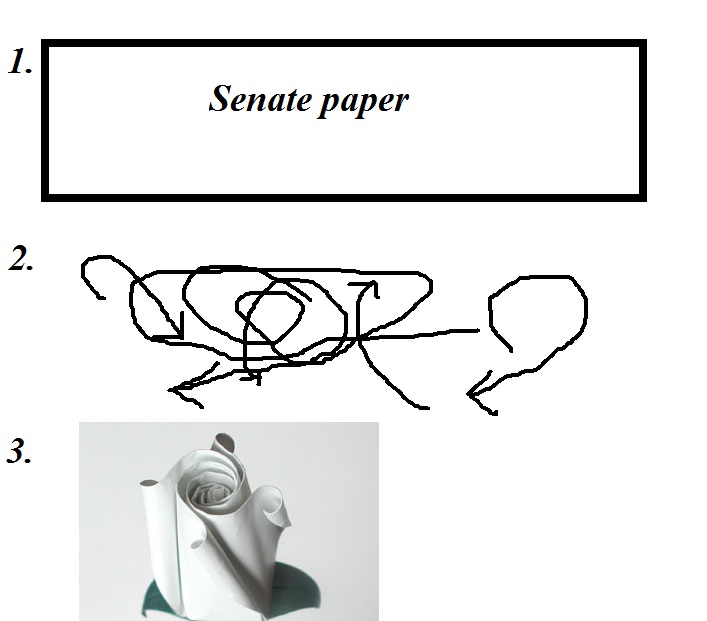
Voters will use magnifying sheets to read tiny font on Senate ballot papers  

ABC election analyst Antony Green says voters will need the dexterity of a contortionist to be able to read the Senate ballot paper which has grown to 1.02 metres in length. 
I don't see what the problem is here. Personally, when it comes to the Senate vote, I always vote below the line, so I get to individually number each of the politicians in order of dislike. It's not enough to be able to do away with their parties with one stroke of the pen; sometimes, you just have to create an ordered numerical list in which you place one member of the party behind another so you can quantify to a precise and specific amount your level of contempt for them and their policies. It is very easy indeed to vote for the worst politicians and place them up the end of the list, and not so hard to vote for those you want most, but somewhere in the middle, when you have to take account of all the ineffectual politicians, and sort the could-be-amusing parties from the possibly-quite-irritating ones and distinguish them from the actually-rather-disturbing groupings, there's always a pile up, and suddenly it's not just advanced origami and contortionism that you find yourself having to indulge in, but you also have to suddenly deploy everything you've ever known plus anything you've ever forgotten plus some of the stuff you never knew but now wish you had about algebra, quadratic equations, trigonometry, and arithmetical series, in order to make the two ends come together in a pleasing fashion. It's great fun, and I recommend it. Anyway, voters of a less masochistic frame of mind than me may find the continued growth of the Senate ballot paper infuriating and frustrating, but there's really no need. There's plenty of things you can do with a ballot paper to make it easier to handle:

1) Fold it up and use your scissors to create pleasing paper dolls, perhaps in the form of politicians you wish to vote for.

2) Roll it up, pinching one end tightly shut with a paper clip, and using it to deliver gifts of chocolates and sweetmeats to friends and lovers.

3) Actual origami!

4) Alternatively, you can hold it above your head and shake it back and forth to create convincing thunderous effects to awe and impress your audience. Never let it be said that Australians are not pragmatic people!

Monday, July 08, 2013

Ridgey didge bridge

AN AUSTRALIAN woman has found a bridge to love, marrying the 14th century Le Pont du Diable Bridge in southern France....Ms Rose did not say how she determined the gender of the bridge. - Telegraph, Jodi Rose bridges differences to marry Le Pont du Diable Bridge in France

Ode to a bridge 
O tensile structure of chromium steel 
Spanning land sea and sky like a God of this place
As you chant day and night to the thrum of the wheel
With your girders and pylons aquiver in space
O glorious neomodern geospatial design
You beckon me on with your galvanic gleam
Infrastructure so perfect, your arches so fine,
O marvel of science I am yours you are mine. 

(It was only part way through writing this piece that I found out the bridge in France this lady was marrying was centuries old and made out of brick. Oh well.)

UPDATE! - Well crap, I didn't even get the rhyme-scheme right. This poem isn't worth the paper it's not written on!
Ooh la la. 

Sunday, July 07, 2013

HILARIOUS JOKES INVENTED BY ME TIMOTHY TRAIN

THESE ARE ALL JOKES THAT WERE INVENTED BY ME TIMOTHY TRAIN IN THE KITCHEN WHILE WAITING FOR A POT OF WHEY TO BOIL, YOU CAN TELL THEM TO ONE ANOTHER IF YOU LIKE BECAUSE THEY ARE ALL HILARIOUS.

Q: HOW DO YOU TITILLATE AN OCELOT?
A: WITH SEX.

Q: WHY IS THERE NO COUGH MEDICINE IN THE JUNGLE?
A: BECAUSE OF THE INSIDIOUS INFLUENCE OF CAPITALISM.

Q: WHAT IS THE DIFFERENCE BETWEEN A STEAM TRAIN AND A TEACHER?
A: ONE IS A STEAM POWERED ENGINE, AND THE OTHER TEACHES YOU THINGS.

THANK YOU FOR READING THESE HILARIOUS jokes ooh the caps lock was on sorry okay good night now.

Thursday, July 04, 2013

The schlock of the new


I tried to use my new new card yesterday, but it turned out to be the new old card that I got after my old old card didn't work anymore. After working out all the confusion I managed to get my new new card working and threw out my new old card, but I can't help but worry how long it will be before my new new card becomes my new old 'new new card' and I'll need to get a new 'new new card' instead.

Cards are confusing that way. Sometimes, it's true, I'm tempted to use my bookshop card so I can get on a train, or my chemist card so I can borrow books out at the library, although until you can get books on the train or drugs out at the library I think this might be a somewhat vain fancy. (You can sometimes get a free Herald Sun from the train, so that's a start). I suppose all this is why people are calling for a united card that will have everything on it, from driver's licence to membership of a local bird watcher club, which is quite tempting really, since I don't have either of those. Even so, why go with the simplicity of the new when you can stick with the muddle and confusion of the old?

UPDATE! - I just thought of a new new title for this post to replace the old new title. Is it too late to get rid of the old new title and replace it with the new new one? I suppose it is. Anyway: AVANT CARDE. Hahahahahahaha cough cough cough cough....

Monday, July 01, 2013

Valiant attempt at the smallest punctuation mark in the world

PRESENTING A VALIANT ATTEMPT BY ME TO MAKE THE SMALLEST PUNCTUATION MARK IN THE WORLD, ARE YOU ALL READY? 

~


Well? Well? How'd I go?

Sunday, June 30, 2013

That time I listened to the football with my cats

You will all be wildly surprised to hear the news that we have two cats, Harriet and Beatrice. As you would imagine, Harriet is an ardent supporter of the Geelong Cats, while Beatrice, like me, is a devoted, er, devotee of the Richmond Tigers.

This evening, while the Baron went away to the far north for a few days, we all indulged in a little group bonding activity and listened to the Richmond vs. St Kilda match on the radio. Here is how it happened:

FIRST QUARTER
I turned the radio up loud so we could all hear it in the house. Beatrice mostly slept on the chair in the living room by the radio for that time, but soon the excitement got too much for her and her ears pricked up. Meanwhile, Harriet, who obviously had less at stake in the game, slept up the other end of the house. It was an exciting first quarter of football all right, and we were all on the edge of the seat by the end of it. Well actually Beatrice had jumped off the seat by the end and was sitting in front of the piano.

SECOND QUARTER
Beatrice was clearly concentrating hard on her team's efforts this quarter. She just sat in front of the piano and looked ahead while the game went on. She was clearly gripped: she didn't move an inch. I'm not sure why she wasn't looking at the radio, but come on. She's just a cat. She wasn't expected to know that that was where the sound was coming from. Oh yeah, Harriet came out that quarter too and joined her sister in front of the piano and looked ahead too, I suppose just because Beatrice was doing it.

During the break between the first half and the second half, funnily enough, for most of the time Beatrice and Harriet continued sitting looking ahead to the piano. They couldn't wait for the second half to start! Well I'm not surprised, the tension was almost unbearable.

THIRD QUARTER
During this quarter, Beatrice went to the donut shop to get some treats for everyone. Well okay she miaowed at me and took me in to the kitchen while I filled up her food bowl with biscuits. The tension was almost too much for her in this quarter: she started poking around behind the couch. (As for her sister, well, she couldn't stand the tension at all - she ran outside.)

FOURTH QUARTER
Well for the thrilling finale to the game, Harriet did come back in but then plonked herself under the piano seat again. Beatrice had gone back to sitting and looking fixedly at the piano too. Actually, their eyes were very focused on the piano indeed. Hang on, I thought - are you cats interested in the football at all? Wait! They were looking for that damned mouse again! They weren't even listening with me! I had been fooled all along!

And that is the story of that time I listened to the football with my cats.

What? Oh yeah. The Tigers won.

 A thrilled cat.(Photograph courtesy of the Baron).

Thursday, June 27, 2013

How to knead a quarter droplet with naught but an egg white and the whisker of a cat.

"Why do so many brewers have beards?" was the question posed a few months ago on a certain Facebook page of a certain brew and cheese making store. To which I was pleased to be able to respond: "Beards add flavour, like cat hair". As I recall, they agreed with the broad thrust of my argument but caviled with the inclusion of cat hair.

Splitting cat hairs aside, the question of ingredients and proportions and ratios and recipes for beer and cheese is endlessly fascinating. Bugger the dispute over metric vs imperial, pounds and litres and gallons and quarts and oddities such as 'The Vanishing Australian Tablespoon', what we really need to worry about is quarter-droplets and walnuts and nickels and the balancing of eggs and how to knead with spoons.

 Blurry out-of-focus cheese to be eaten by blurry out-of-focus hipster.

Directions in slightly recondite culinary procedures like brewing and cheese making can be irritatingly imprecise. When I first started making full mash beer I was driven crazy by the direction 'add yeast' in recipes. 'Add yeast? How much?' Brewers, apparently, used to just skim yeast off the top of their beers once brewed, (or took the yeast from the bottom once the rest had been drained away); placed in a new cask of unfermented ale the yeast would remultiply and go to work again. These days you can just go to the store and get yeast (it comes in a little square packet that sits comfortably in the palm of your hand), but this tiny packet is for a 5 gallon, 23 litre batch of beer. I still don't have all  the material to do a full 23 litre batch; all my beers have been little 1 gallon/5 litre runs. So one afternoon I found myself opening up one of those yeast packets, pouring out all the yeast, weighing it, working out roughly how many teaspoons it was, and pouring it all back into the packet. Then again, yeast is completely puzzling: when you add it to beer, you expect it to multiply anyway. It's an ingredient that grows! And then, equally mysteriously, at some point it will just collapse and waste away.

Cheese culture is just as puzzling; it's the bacteria that curdles milk, lives in the stuff, but dies off after a few days if you don't preserve or propagate it. I've had some culture in my freezer for months, and repropagate it every few weeks - though each time, it comes out slightly different. It was traditionally kept going by just taking a bit from the curds every time you made some cheese, setting it aside, and then re-adding it to milk when you wanted to make more cheese.

Cheese making books and recipes can sometimes sound completely fey and whimsical. My Rikki Carroll book Home Cheese Making is perfectly splendid in many ways, but it also contains some notable eccentricities. 'Break the curds into walnut-sized pieces' reads one recipe. 'Break into nickel-sized pieces', says another, which last direction seems to combine the question of size and shape with that of international finances. 'Cut the cubes [of curds] into rice-sized pieces' specifies a third, which is really getting ridiculous. Other recipes inform you that the curds when treated should have a consistency 'like cooked chicken flesh' , or 'custard'; on page 140, I even found 'The curds should now be about the size of a grain of rice, and they will squeak when chewed'. There are plenty of directions like 'stir curds gently', 'stir occasionally to prevent the curds from matting', which are lovely - though they are completely contrary to a direction I found in a recipe in the back of one of Kerry Greenwood's books: 'Punch the dough about for a bit'. Crikey. No wonder she's a crime novelist.

One recipe for Chevre I downloaded from the internet somehow manages to combine extreme whimsy with utter precision in the direction '1/8 of a drop of rennet' - rennet, of course, being the enzyme you add to many cheeses to encourage the formation of curds and the separation of the whey. It's difficult to imagine letting one drop of rennet run out of your bottle and then dividing that drop up (with - what, tweezers?) before adding the correct portion to the mix. Actually, I'm told the trick is to put the drop into two cups of non-chlorinated water, mix, and then divide that water into eight portions. I'm generally too lazy to do all that, but occasionally, when I make cream cheese, I do keep a jar of rennet in the fridge for several runs. It's easy:

Ingredients: 200 mils milk
200 mils pure cream
A tablespoon mesophilic culture (don't ask me how much this is from the packet, I don't know)
1/8 drop rennet mixed in 1/4 cup non-chlorinated water (ie, a splash from the jar)
Method: Heat the milk and cream gently to just over 20 degrees celsius, pour into a jar, mix in culture, add rennet, shake it up, and leave it in a room at 25 degrees celsius for a day and night. The kitchen will do, or, if you live at my place, the study, where  I often have the heater on. When the curds have separated from the whey (the whey will be the greenish liquid at the bottom), pour it into a cheesecloth bag over a bowl, tie the cheesecloth bag up and hang it up to dry for a day. Ta da! What you will have is a delicious cream cheese that nobody but you will want to eat because everybody is on a diet or doesn't like cream or suddenly seems to like their cat biscuits and which therefore you will be able to have all to yourself.
Cream cheese sausage: three of my favourite things. 

Anyway. Where was I?

So, while cheese recipes generally seem to have a 'bung it all in and see how it goes' approach, beer brewers can be rather pedantic, verging on completely obsessive about their directions, to the point of including tables and percentages and weighing up the chemical content in different types of hops and specifying the precise temperature at which barley malt should be mashed at and the fine details about which sort of malt to buy and whether you are stirring the malt with a spoon made from a rhinoceros tusk or the wood of a Nubian oak sprung from virgin soil that has been well watered with ox blood and I just made that last bit up but you get the picture. If you google a few full mash recipes you'll soon see that some brewers set out their recipes more like directions for chemical equations than anything else, which level of precision infuriated me just as much as the complete lack of precision in the direction 'Add yeast'. My beloved Laurie Strachan book, The Complete Guide to Beer and Brewing, is the exception here because it actually sets out the list of ingredients as in a recipe, and follows up with a method. (And following that link now, I discover another bizarre recipe direction, courtesy of Steve: when making sake, you apparently have to polish the fatty bit off each rice grain).

Old brew books, and old recipe books in general, have the same mixture of fastidious exactitude and imprecision. Checking out the online version of Digby, who collected a whole heap of mead recipes just because he could, you find that eggs feature heavily in recipes for the honey-based drink:
put in a New-laid-egg; if the Liquor beareth the Egg, that you see the breadth of a groat upon the Egg dry, you may set it over the fire.
Egg white is used as a clarifying agent -
let it boil gently, till you have skimed it very clean, and clarified it, as you would do Suggar, with the whites of three New-laid-eggs.
Plenty of other recipes have similar directions - 'it is to bear an Egge boyant', 'a New-laid-egg swims upon it', etc. (I wonder if the addition of eggs might also give the yeast nutrients (which they need to eat in their initial stages of growth); one old recipe for cider calls for you to drop a steak into the drink before it begins fermenting, which may have performed the same function.  Another old American brewing book I found in a Thornbury bookstore has several directions like 'spread the yeast on toast before adding to the liquid'.)

Other directions include 'Take one part of honey, to eight parts Rain or River-water', 'Take Spring-water', 'take six handfuls of Sweet-bryar'; there are instructions to not mix mead 'in a wooden vessel, for wood drinketh up the honey', and the singularly non-specific but nonetheless helpful and encouraging instruction 'Take of all sorts of herbs, that you think are good and wholesome'.

Old recipes for cheese, some of which I have in my under-used copy of Martha Washington's Booke of Cookery, are similarly intuitive:
TO MAKE AN EXCELLENT WINTER CHEESE
To a cheese of 2 gallons of new milke, take 10 quarts of stroakings & 2 quarts of cream. put to it 4 spoonfuls of rennit, set it together as hot as you cam from ye Cow...

Or I vaguely recall directions in other old recipes - possibly that I found on Gode Cokery - to 'set the cheese' so far from the fire, so it is the right temperature. (Actually, that reminds me, once I carried some cheese culture around with me for a day trying to warm it with my own body temperature, but it didn't set well - the culture was the sort that liked temperature to be around 25 degrees, room temperature; my body temp was the usual 37 degrees*.)

Those are about all the recipe eccentricities I can think of at the moment. But before I forget, I should tell you, I think I've finally worked out how, when you're making mozzarella, to 'knead with spoons': don't. See, what you have to do is wad the mozzarella curds together with a ball before dipping them several times in hot whey and kneading them. You can use the spoons to hold the curds under the whey, and press them on the curds to give them shape, but in between you do the kneading with your hands (covered in gloves). You just moosh them together to make them join up while squeezing out the whey. See? Now aren't you glad you rhetorically asked me? Don't rhetorically answer that. It could, rhetorically, get very heated indeed.

*(UPDATE! - This footnote is an update.) In Buffy, as everyone knows, vampires are actually room temperature. So theoretically you could culture milk by a simple method: 1) CATCH VAMPIRE 2) DON'T STAKE VAMPIRE 3) DON'T GET BITTEN BY VAMPIRE 4) STRAP CULTURE TO VAMPIRE 5) LEAVE FOR 8 TO 12 HOURS. There, you see, completely safe.

Wednesday, June 26, 2013

The best woman man thing for the job!

Clearly things have been a bit quiet and simple lately, and people have started to feel a little complacent, because the Australian Labor Party has decided to come along and make everything more complicated and confuse the entire public. Let me see if I can sum up the entire situation:

Certainly, Kevin Rudd was the Labor man best suited to be Prime Minister in the lead up to the 2011 election, a position which he held before Julia Gillard was obviously the best first female Prime Minister ever to contest the same election, for the Labor Party, which was definitely the best Labor Party to vote for in that historic election. Aside from being the only first female Prime Minister Australia has ever, or will continue to ever have, until the next one, Julia Gillard was also clearly the leader best suited to lead the Labor Party to the 2013 election, until Kevin Rudd took over those positions tonight, making him without a doubt the best man to be female Prime Minister elect ever, and in the unique position of being yesterday's man for the future two seconds ago today, but whether he will be the same man of yesterday's future when tomorrow is Monday is another question entirely. However, as Bill Shorten will have already said any day now, "Whatever Kevin Gillard, I mean Julia Rudd, I mean Kevin Rudd said, I'm sure he's right".

What does this mean for Australia? Concerns have already been raised over the fact that this backstabbing in the middle of a show down could lead to a blood bath such as we haven't seen since the Titanic fell flaming out of the sky, but on the other hand Tony Abbott is certainly not fit for the role of female Prime Minister, so that's okay then.

Confused? Good, carry on then.

Mission proposition

Considering the situation in Canberra (you know the one, yeah, that one) I propose a new phrase to be added to the Macquarie Dictionary:

Ruddy Gillard, to do a (phrase) - to wreck one's party and, by extension, one's country, through a needless and prolonged leadership crisis.

Monday, June 24, 2013

Doctor vs Doctor

Recently, courtesy of the Baron's library card, I've been watching old episodes of Dr Who - the Doctor from the sixties and seventies and eighties, I mean, when the Doctor was old, he wore impressive flowing capes and scarfs instead of leather jackets, sex and romance was absolutely inconceivable, and the show was actually good. I had a great time starting off with the Jon Pertwee Doctor's Invasion of the Dinosaurs. Scenario: the Doctor and Sarah Jane-Smith find themselves in the middle of London that appears to be completely devoid of people. "No cars, no pedestrians, no police, nothing!" cries Sarah. "Maybe it's Sunday. London always closes on a Sunday" says the Doctor conciliatorily. Later they try to call the police on a public phone, which doesn't work, maybe because it's been vandalised. "Nothing wrong with vandals", says the Doctor, "They're very nice people".

All this niceness was highly amusing; by the time a dinosaur appears - halfway through the first episode, demolishing a city building - I was actually cheering. There were the good old boys from UNIT HQ, of course, with their bullets that never worked, trying to fell a dinosaur; and the villain, with clipped nasal tones and sinister glasses (I'm not sure how but they really are sinister glasses), operating in some secret London laboratory. In, I suppose, the fourth episode Sarah gets abducted onto a futuristic spaceship full of colonists fleeing an ecologically-devastated earth - it's actually a fake spaceship, and the colonists have been brainwashed, in a clever 1970s twist that recalls various J G Ballard plots - and is sent to the 'Reminder Room' for 're-education' so she can be part of this grand ecological repopulation scheme as well. (I liked this bit very much: for one thing, it's refreshing to see a science fiction plot in which ecological paranoia is actually viewed as suspect. For another  thing, people always used to say about Doctor Who that 'the sets wobble'; well, here was an early Doctor Who plot in which the drama actually depended on the characters not noticing that the sets wobbled. No need for us to willingly suspend our disbelief when the actors do it for you.) And yes, it really does all end with the Doctor reversing the polarities of something or other because science.


Quickly, Doctor, reverse the polarities of this cup of tea before it's too late!

Hard Science Fiction adherents might object to the somewhat cavalier way that the old BBC show adopted scientific terminology, but it never bothered me as a kid: it's just science fiction with an emphasis on the fiction. In the other show I watched - The Android Invasion ('Invasion', along with 'Fatal' and 'Deadly' and 'Death' and 'Curse' and 'Evil' was always one of the Doctor Who team's favourite words) - there's a scene where Sarah has to free the Doctor from a post he's been tied up to so they can escape a 'matter dissolving bomb'. She can't cut through the cords with a knife, and the Doctor says 'The sonic screwdriver! Quick! Set it to Beta Omega!'  'Science as magic' appeared in those episodes of the new Doctor Who that I watched too, of course, though as usual the old series did it better: when the Doctor begins gallivanting around the universe with Rose Tyler, he gives her a mobile phone that, magically, allows her to call back home whenever she feels like it, no matter how far back or forward in time she is, or was, or will be, and no matter how far away earth is, or will be, or was.  You'd never get this sort of thing in the old Doctor: science may have been powerful, but the adventure relied upon characters being thrown onto their own resources, marooned in incredibly remote locations, and isolated from their family, their country, their world, and sometimes even their universe. The old Doctor Who show trusted its characters to be resourceful and independent and courageous in a way that the new Doctor Who show doesn't: that's progress - the new is less than the old.

Aside from all this, what really stands out about the old show is the technology, in all its rustic charm. No more are the computers and televisions and radios that I grew up with in the 80s new. They wobble, they blur with static, their knobs are too big or too small, there are no remote controllers, in short they don't impress anymore with their bizarre otherworldly gleam. The future is certainly not futuristic; whenever the BBC producers wanted to convey an image of the earth in, say, 100 or 1000 years from now they either seemed to go for the 'apocalyptic wasteland' look (empty desert, dotted here and there with grimy scowling men, probably with Yorkshire accents, going about in rags), or the ' claustrophobic spaceship' look (cream-grey walls, the occasional sets of flashing lights, electronic doors that slide open or shut on command for the characters).

In Android Invasion the Doctor and Sarah travel back to the earth on a rocket, and back on earth there's a whole impressive room for communication purposes with the rocket - that is, it's meant to look impressive but the computers just look incredibly dated, with probably less data space than my Dad's old Commodore 64. The Androids themselves are incredibly hokey - occasionally their faces spring open to reveal a metal plate with a few lights on it; when they don't have faces they're given suits to look like beekeepers, and are able to fire bullets out of their fingers. Invasion of the Dinosaurs ends in an underground bomb shelter of the sort that were constructed by the British government during the Cold War - incredibly extensive spaces complete with deep frying vats and a labyrinthine series of rooms for meeting up (or, in the case of this show, constructing a time warp machine in order to bring a series of dinosaurs into central London to terrify the populace to create a devastating distraction in order to continue on to the final stages of their diabolical plot which I'll get around to in just a moment when I have a glass of water). They do this using a nuclear reactor, which of course was down in the bomb shelter as well. Maybe the Doctor's fashion sense - capes, mile-long scarves, question-mark collars - was meant to anticipate a kind of future trend amongst his own people, the Time Lords, but then again his fellow Time Lords all had terrible taste in clothes, save, perhaps, The Master. Nothing dates quite so quickly as science fiction, something which Michael Moorcock - one of the shrewdest of Dr Who's fans - realises in his novels, which involve intercontinental, time-travelling, dimension-hopping characters moving through dimensions, places, and times that all seem to have been envisaged in other dimensions, places, or times - futures as imagined by the past, pasts as imagined by the future.

It's all very lovely, this look at the past Doctor Who and his journeys into a future that never was.  In just about every scene there's something that makes you sit up and remember how things were. Communications are by intercom, public telephone, landlines, not mobiles or computers. (Even when the aliens talk to their fellow conspirators via television it feels like an intercom conversation with images). The computers don't even seem to have keyboards; there are just large fiddly knobs on the right hand side. The TARDIS itself is an exceedingly eccentric device for travelling - no steering wheel at all, just a gigantic octagonal computer in the middle. Just watching the show makes me daydream now about the world I grew up in, where remote controls didn't even exist, and televisions really did have impressive arrays of knobs and switches and notches on them. I thought about the achingly beautiful, comforting televisions of the past - sturdy, squat little boxes, standing on legs in the corner of the room, pleasantly rounded around the sides, in warm brown and ochre colours - and compared them with the sleek, flat, gigantic, digital, plasma televisions of the present. Is it any wonder that the new, disappointing Doctor Who has been made for such an obviously inferior medium?

Take back the future, I want to go back.

Sunday, June 23, 2013

Put down the milk, sir, and back away from the bath...

Milk. You know, watery white stuff, comes out of the udders of a cow, can be produced in great quantities, bottled, sold to people at shops, you can make cream and cheese out of it, excellent product. Seems simple, doesn't it? But at some point we all got confused about the whole damn thing, and we started getting things like 'raw milk' and 'bath milk' being sold on the shelves alongside, um, 'milk' milk. You know, 'Raw milk' - it's milk that isn't pasteurised or homogenised before being sold to customers. Same deal with 'bath milk'. Same as virtually all the milk that's been drunk by our ancestors since bovines and primates first began cohabiting the same spaces.

So today I made a raw milk cheese. I did it because you're supposed to get better results if you make mozzarella out of unpasteurised milk; fewer proteins and less culture get destroyed and makes the curds more pliable in the final stages. Well, no. Actually I made it because the very slight risk of contracting listeria from a slice of delicious raw milk cheese adds a delicious zing to the cheese and makes the taste that much more delectable.

In fact the raw milk wasn't nearly cultured enough for me; I even added a spoonful of yoghurt (live cultures: acidophilus, bifidus, plus a spot of Mozart and Picasso) to the mix and let it think about what it had done while I went off and wasted my time elsewhere.

Anyway, you know how it is with recipes: pour this in, heat this up, stir this around, let this rest, bla bla bla. So here I was, busily doing all this over the stove, and of course at some point - when you've got the mozzarella curds ready, you heat up the leftover whey, and you repeatedly dip the curds into the whey to turn them into mozzarella cheese, proper - you come across the baffling recipe direction:

Knead with spoons

Knead with spoons? You might just as well say make a cabinet with penguins. Fey and whimsical and ambiguous directions often pop up in my cheese recipes, I've got to say - I'm making a list which I'll be happy to report on soon - and this one is definitely being added. (This recipe was from Rikki Carroll's excellent Home Cheese Making).

How was the mozzarella in the end? Disappointing. I'm not quite sure what it is about the curds, but they still don't quite have that mozzarella feel to them. No, I don't know what that is either. Disappointing. But delicious. That tasty, tasty, just-possibly-with-a-hint-of-listeria-zing. I recommend it.

And remember, every bottle of raw milk you take off the shelves, you save from some hippy who wants to pour it into their bath. Because hippies having baths is so very, very wrong.

Wednesday, June 19, 2013

Think thing

Is thinking over
Overthinking?

Is thinking over thinking
Over thinking thinking?

Is overthinking overthinking
Thinking over thinking over?

Is overthinking ever thinking?
Is thinking ever over?
Or is this just overthinking thinking?
Is this think thing over?
Over.

Sunday, June 16, 2013

An overstated understatement poem

An overstated understatement poem
or possibly
An understated overstatement poem

The overstated underpants
Were much too undersized
To cover over much at all
Or leave it in disguise,
And what they didn't cover over
Was less than you might wonder
Hence the underwhelming underpants
They only half sat under.

Friday, June 14, 2013

A pleasant post about my chickens

We have new chickens. Have I mentioned that? We have new chickens, two glossy black-emerald feathered Australorps; their names are Shirley and Esme - or, because they're barely distinguishable, and they're always together anyway, perhaps we should refer to them by the one name: Shirleyandesme? Esandshirl?

But yeah. Pertinent points: New. Chickens. They're due to take up their laying duties soon, but in the meantime they're working on their other talent (and what a talent it is), escape. Their principal method is to fly over the back fence when I'm in the room at the other end of the house; there is also a subsidiary method, but we'll get to that soon.

Once they're out and over, a simple five point manoeuvre is employed on my part.

1. Open the back gate to go out after them.
2. Close the back gate again because the other chickens have heard it and come running, excited by the possibility of getting some oval time.
3. Going round the side of the house and scattering some seed to distract those chickens.
4. Opening the back gate and slipping out while the chickens are distracted.
5. Closing the same back gate and holding it shut with a pole stuck in the ground.
6. Walking the Australorps (wherever they are) back to the gate.
7. Opening the gate and somehow attempting to keep the other chickens in (they have ceased being distracted by the food and are now distracted even more from their previous distraction by the oval, which is really just one gigantic food bowl)
8. Running after the Australorps again, wherever they have got to, and walking them back through the gate.
9. Walking the other chickens back in through the gate again.
10. Somehow making sure that the Australorps don't get out while the other chickens are getting in, shutting the gate, and going back to the other end of the house waiting for the whole exercise to be repeated.

As you will have worked out - probably at about point seven of my simple five point plan - it's all pretty tricky, and I'm not sure whether I'm fully practised in the finer details yet. Strangely enough, the Australorps only seem to do this escape trick once a day; the rest of the time they work out other tactics for escape around the garden, which I discovered the other day when I was trying to walk them back into their house before it was dark because I had to go into the city. First of all they refused to be walked to that corner of the garden where their house was, and kept turning around and dashing back to another corner, then when I got them near their house they veered away repeatedly, then they ran to the other corner of the garden and split up into two so I had to choose which one to chase and by the time I'd got that one cornered and almost into the house the other one would be far away and I'd have to let that one escape while I ran after the other one, then infuriatingly they ran around a tree in pointless circles so that I wasn't walking them anywhere and they weren't walking me anywhere; I became quite outraged, I spluttered, I blustered, I waved my arms in the air, I swore like a maniac, basically I was having a great time; and still the Australorps weren't in their house! So I gave up and left them there.

That's about all I wanted to say today about my chickens.

Thursday, June 13, 2013

Sodomy by electric eel and the exciting world of customer service

A while ago I was standing around La Trobe University waiting for the Baron to call (I didn't have any credit on my phone) and walking around in ever more erratic figures looking for the right building to disappear into. I was quite confused, a little bit puzzled, and completely lost. After a little while I happened to bump into a woman who, with solicitous concern for my welfare, must have noticed that this tall messy bearded person walking in eccentric polygons all over the courtyard, looking lost, probably was lost. She asked the natural question: "Are you lost?"

To which my natural reply was, naturally: "NO THANK YOU QUITE ALL RIGHT GOOD BYE THANK YOU!" And walked very quickly in the opposite direction where I could be lost in peace.

I have a thing. My thing is this: people helping me: I hate it.

Quite why it is that I should be so terrified of the helpful prospect of helpful people helping me when I need help, I do not know. But almost every other day (I am, as you can imagine, one of the most helpless individuals on the planet when plonked out of my familiar environment) I run into more examples of this. I'm even worse than normal when people approach me in shops and asking, "Can I help you?" (Why do they seem to do this more in some stores than others?) Their use of the word "help" somehow makes the situation even more excruciating, and, I am ashamed to say, my response to their pleasant offer to assist me in order to facilitate a commercial exchange of money is often met with a curt response on my part, more or less along the same lines I have described above: loud denial accompanied by the speaker walking in the opposite direction. (Ask the Baron. She's been there when it's happened.)

Tip to all shop assistants who want to sell something to me: next time you approach me, why not say: "Can I tip a vat of liquid elephant manure over your head?" I might even say "Yes". Then you might just be able to sell me whatever you like. (Other useful variants to this line may include: "May I poke Ottoman sabres through your heart?" "Would you like to be sodomised by this electric eel?")

Worst of all, for some reason, is when it happens in the chemist. Of all terrifying, awful, and frankly rather embarrassing situations, standing around in the chemist and suddenly being approached by a pleasant person tenderly inquiring if I might need some help is just the pits. Really, I could be coughing up blood, have two legs rotting off with gangrene, my arms lying limp, bloodied, and useless at my side, and my head lolling at a quaint angle suggesting a very painful broken bone, and if somebody were to approach me in that situation asking if I needed help, then I am really not sure whether my answer would be "Yes" or not. I might very well deploy my standard defence, yelp out my predictable denial, and walk - well, crawl, perhaps - very quickly in the opposite direction before the dreaded help could arrive. It's my thing, you see. Help: I do not like it.

The metamorphosis of me into cranky old man continues apace, as you may have observed. It's getting so bad, honestly, that soon I'll be getting outraged at the directions on the back of soup packets: "Boil water and mix in soup". "Well that's just bloody presumptuous, isn't it!"

So, anyway, that's my thing about help. So now that you know about it, I wonder if you might.... NO THANK YOU QUITE ALL RIGHT THANK YOU GOOD BYE GOING IN OPPOSITE DIRECTION THANK YOU NOW GOOD BYE NO!

Monday, June 10, 2013

Your life looks like the wreck of the Hesperus!

In the last week, we've had several interstate visitors round, which is lovely, but this morning we've finally had the chance to put the house back in order again.

I started things off by spilling fejoia wine onto the floorboards (although, come to think of it, 'spilling' implies an accidental occurrence; perhaps it would be better to say 'tipping'). I continued in this way by boiling a large pot of water on the stove, and then walking into another room while it repeatedly splashed all over the place.

Meanwhile, I wandered up and down the kitchen in filthy shoes until it was thoroughly muddied up: good. In the bedroom, I patted the cats until copious amounts of fur where whirling and flying through the air, and thoughtfully spread out dark blankets to capture and show off the furs at their best. I took several dirty cheesecloths and muslin bags which I'd used for sparging and infusing beer with hop flavour, and dumped them in bowls of water, before taking them out and flinging them idly into the laundry*; I pulled several clothes out of my cupboard and left them lying on the floor just because I wasn't sure I was living down to my usual standards of filthiness; and I left some old socks that I'd been wearing around the house for the past few days to hang up in some dark cupboard spaces, just to mature.

I'm almost done now. But later, I might leave the door open and be 'surprised' by the chickens coming inside, wait until they've scattered the cat food everywhere and left several fertile fecund messages under the table, and then fill a bucket full of mud and use it to mop up the kitchen some more. Just to add to the general hygienic atmosphere. Ah, home sweet home.

*'...before taking them out and flinging them idly into the laundry' - obviously I am referring here to both the cheesecloths and bowls of water.'

Friday, June 07, 2013

It's a high likelihood, and it squeaks

Over the past few days, I have come to the conclusion that it's just possible, verging on highly likely, that we have mice in our compost bin out here in Lalor. Nothing is certain in life, of course, not to mention balance of probabilistics, statistics, heuristics, and what not, but I really do think we have mice.

A number of signs seem to have been pointing to this. For one thing, for the past few weeks, when we've been letting the cats out for exercise, that exercise has consisted in them sitting on the cold ground in front of the compost. For three hours at a stretch. That, then, is one sign pointing to the likelihood of mice.* Another sign: odd holes appeared here and there in the compost; that seems to raise the evidence of mouseular existence from a definite maybe to an absolute possibility. And there's a third thing, too: the other day, when I went out and opened up the compost bin lid, about eight mice ran around the compost bin in great confusion before disappearing down those holes. Call me simple, if you like, but that would seem to be an almost definitive indicator of the high probability of the continuance of life of a rodent kind at close quarters with the own human, feline, chookish, and apiarian life forms existence in or around our house.

I jest, of course; because the other day, when we turned over the compost bin for good (the cats and chickens were ebullient; some of the other life forms, less so), the high likelihood of rodents existing near the house suddenly turned into a high likelihood of rodents existing within the house. The cats suddenly became dramatically less interested in going outside at all; all of a sudden their favoured activity seems to be to sit on the kitchen bench and stare with an intense moodiness at the stove. Nothing that Fabio doesn't do in his spare time, I'm sure, but more curious activity for our cats to get up to. Such intense moody staring is occasionally punctuated by a sudden clattering of jars, usually while we're on the other room.

Guys, maybe it's just me. But I think it may be the case that we could possibly have mice in the house.

*Nor should I forget to point out that time, about four weeks ago, that Beatrice spent all night romping and pouncing and frisking about in the rosemary, before coming back to bed apparently highly satisfied with her endeavours, perfuming the whole room with a pleasant herbal odour.

Tuesday, June 04, 2013

Pastie-faced people unite

In accordance with the traditional ways of my people (half-arsed city-dwellers of a pastie complexion), I have deleted the name of the now-dead lead singer of Yothu Yindi from my blog, in spite of the fact that I never posted it in the first place. Some may object to this, saying that I am just doing this because I want to seem sensitive about the death of someone without doing much at all, but my reply is simply this: it's convenient. And so, in the words of a famous poet whose name escapes me right at the moment,

Lest we forget remember.

Sunday, June 02, 2013

DC WTF in UK

David Cameron has held crisis talks at Downing Street after being told of allegations of a sensational love affair which has potentially significant political implications for him.
For legal reasons, The Mail on Sunday cannot disclose the identities of the people involved or any details of the relationship – even its duration – other than that they are middle-aged figures.
The affair has now concluded. But this newspaper can report that when aides told Mr Cameron the identities of the alleged lovers he was ‘stunned’, and, according to sources, ‘immediately realised the importance of the story’....
Daily Mail, No 10 rocked by secret love affair
CAMERON STUNNED BY REVELATIONS 

London, Sunday - British Prime Minister David Cameron is reportedly 'stunned' and 'alarmed' at revelations that people actually have sex.

The news about the flagrant sex-having habits of the British populace and the world at large has rocked the Tory cabinet, causing Cameron to immediately hold crisis meetings and release a generic photo to the media of him looking generically stunned.

Generic photograph of the generic Prime Minister looking generically stunned for the Daily Mail.

Further disclosures that 'sex actually is how babies happen', including Cameron's own children, meaning the British Prime Minister may have actually engaged in the activity himself, shocked him still more, causing him to demand a report into the unfolding disaster and commission a study into the report and hold crisis meetings on the study into the report at the same time as the other crisis meetings he was already holding.

'Oh, dude', the British Prime Minister is reported as saying. 'It's just too much!'
Email: timhtrain - at - yahoo.com.au

eXTReMe Tracker

Blog Archive